Category Archives: Recipes

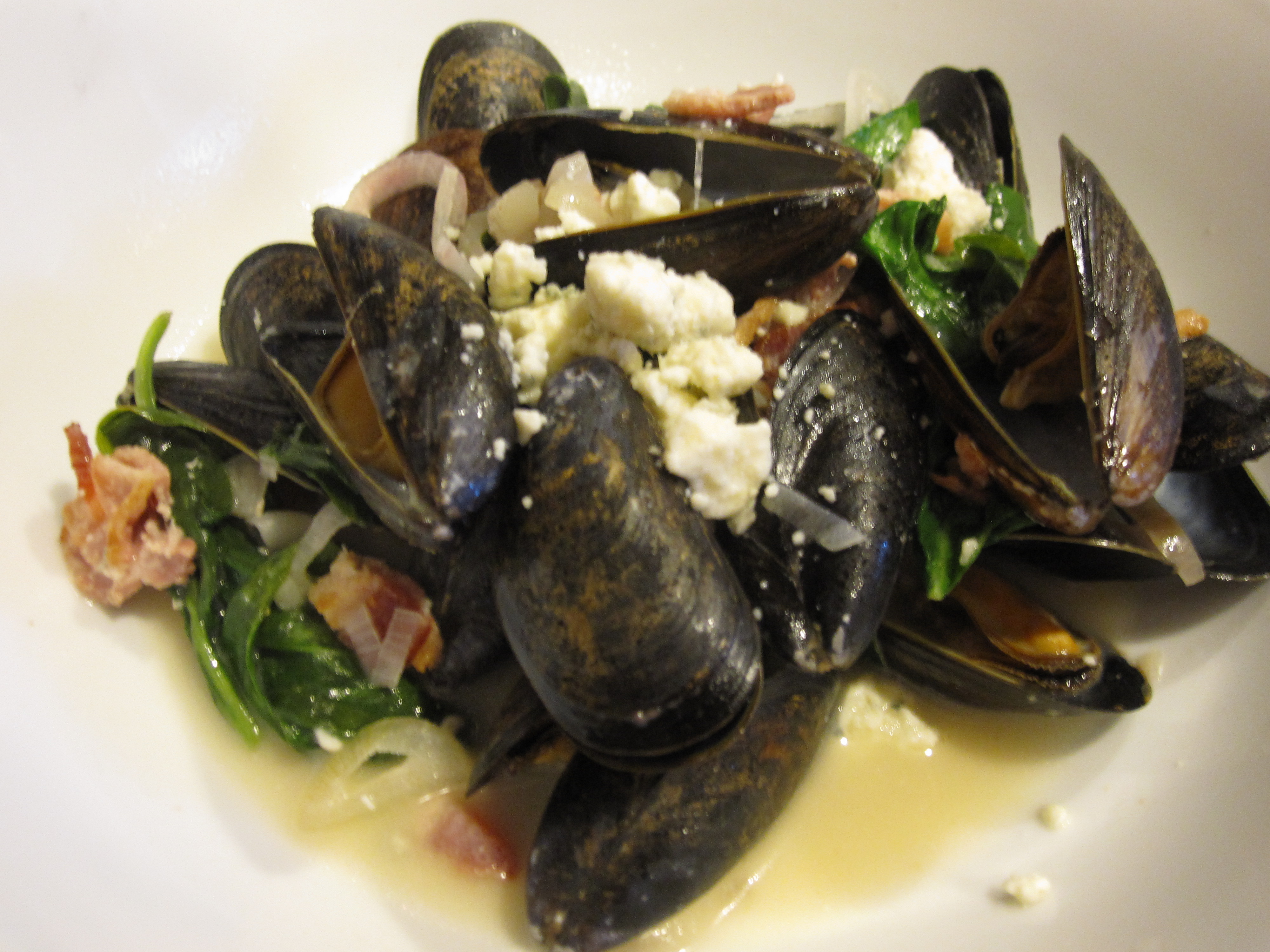
Moules Fromage Bleu

You know that show on the food network called The Best Thing I Ever Ate where famous chefs tell you where they had the best whatever the theme happens to be that day? Well, if I were ever asked what the best mussels dish I ever ate was it would hands down be the moules fromage bleu from Granville Moore’s in DC. In fact, these mussels beat Bobby Flay’s in his mussels throw down episode! Yeah, I love the food network 🙂

I have recreated them several times at home, and it’s actually quite simple. The ingredients are the same, but just not of the same quality as GM’s. (Sorry Giant, but you lack gourmet ingredients). But that’s how it goes sometimes and that’s OK! This dish still tastes amazing, particularly if you are a fan of bacon and blue cheese (an unbeatable combo in my book).

The ingredients:

From top left to bottom left: Blue cheese, mussels, lemon juice, shallots, spinach, and bacon. MIA- the white wine and oil.

Once you get cooking here, the process is very quick. However, first, it’s a good idea to put the mussels in a bowl and fill it with water. This allows any sand in the mussels to fall to the bottom of the bowl. Just remember to not drain them by pouring them out as this will just dump all the sand back onto them. I used a plastic strainer/spatula to remove the mussels from the bowl.

Next, it’s bacon cooking time! The recipe calls for cooking the bacon IN oil. I was very hesitant to do this, but I went with it. It forms the basis of the broth, but I find it very understandable if you wish to omit cooking your BACON in OIL.

Once the fat was rendered, I added the sliced shallots.

Doesn’t that look divine? And you can imagine how great it smelled. How can a dish go wrong from here?

[The next sequence of events is done rather quickly. My sous chef/photographer was feeling a little under the weather, so I was on my own. I tried my best to capture each step!]

At this point you want to add the mussels, wine and lemon juice and stir ’em up.

bacon shallots mussels

Once they are about half way open you want to add half of the blue cheese. You want the blue cheese to melt into the broth. I tried to move the mussels to one side of the pan to achieve this.

Just keep stirring and incorporating everything together.

Once they are fully open, you want to add the spinach.

That’s pretty much it. Once you spoon them into the bowls, top with the remaining blue cheese.

SO GOOD!

Recipe for Teddy Folkman’s Moules Fromage Bleu

Seared Tuna atop a Red Cabbage and Lime Slaw

Sorry that new posts on the kitten have been a little sparse lately! It’s summer and work is busy (and my dropbox had been blocked for several weeks, but now it’s suddenly working again!) but here is a dish that I made recently that I hope you all will like! I started off by making a version of Smitten Kitchen’s cabbage and lime salad with roasted peanuts. Lucky for me, SK and I share an affinity for slaw and she has several recipes on her site which all look amazing. I did not have any peanuts at home (gasp! for those who know me, you know my squirrel-like nut obsession) nor did I have green cabbage or spinach. I did have carrots and bok choy (thanks to Kensington’s farmer’s market!) however, and so this is what I came up with. As you can see, I topped it with some seared (grilled) tuna and topped it with some remaining dressing from the slaw. This dish totally rocked and is pretty much summer on a plate.

First, the slaw. Per SK’s recipe, I shredded my cabbage and placed it in a colander with at least one healthy tablespoon of kosher salt. The purpose of this step is to wilt the cabbage.

While that was happening, I shredded the carrots and sliced up the bok choy. I also added some green onion.

I also created the dressing for the slaw (process not pictured).  The ingredients of the dressing are certainly unconventional for a slaw (at least in my humble opinion) so check them out! Obviously you know one ingredient- limes!

Once the slaw was completed, I prepped my tuna. All I did was drizzle a little hot chili oil onto each side, and coat them with sesame seeds. Greg fired up the grill and seared each one for just a couple of minutes per side. I sliced them up and dinner was served!

Recipe for Red Cabbage and Lime Slaw

Avocado Salad Dressing

One of our friends from college is doing an internship in Maryland for the summer (yay!). He arrived a couple of weeks ago and to celebrate Ashley invited us over for chicken tacos.  I offered to bring a salad, since all I had at home was some produce. I picked up a few extras, such as avocados, and decided to make a homemade salad dressing to jazz things up a bit (making homemade salad dressings is easy and they taste SO much better than store bought!). I wanted to stick to the taco theme and figured an avocado dressing would be fun and different.

This is about the best looking avocado you will find in Wheaton. It was certainly ripe and about a day away from being bad. At least they were ripe though, if not a little too ripe.

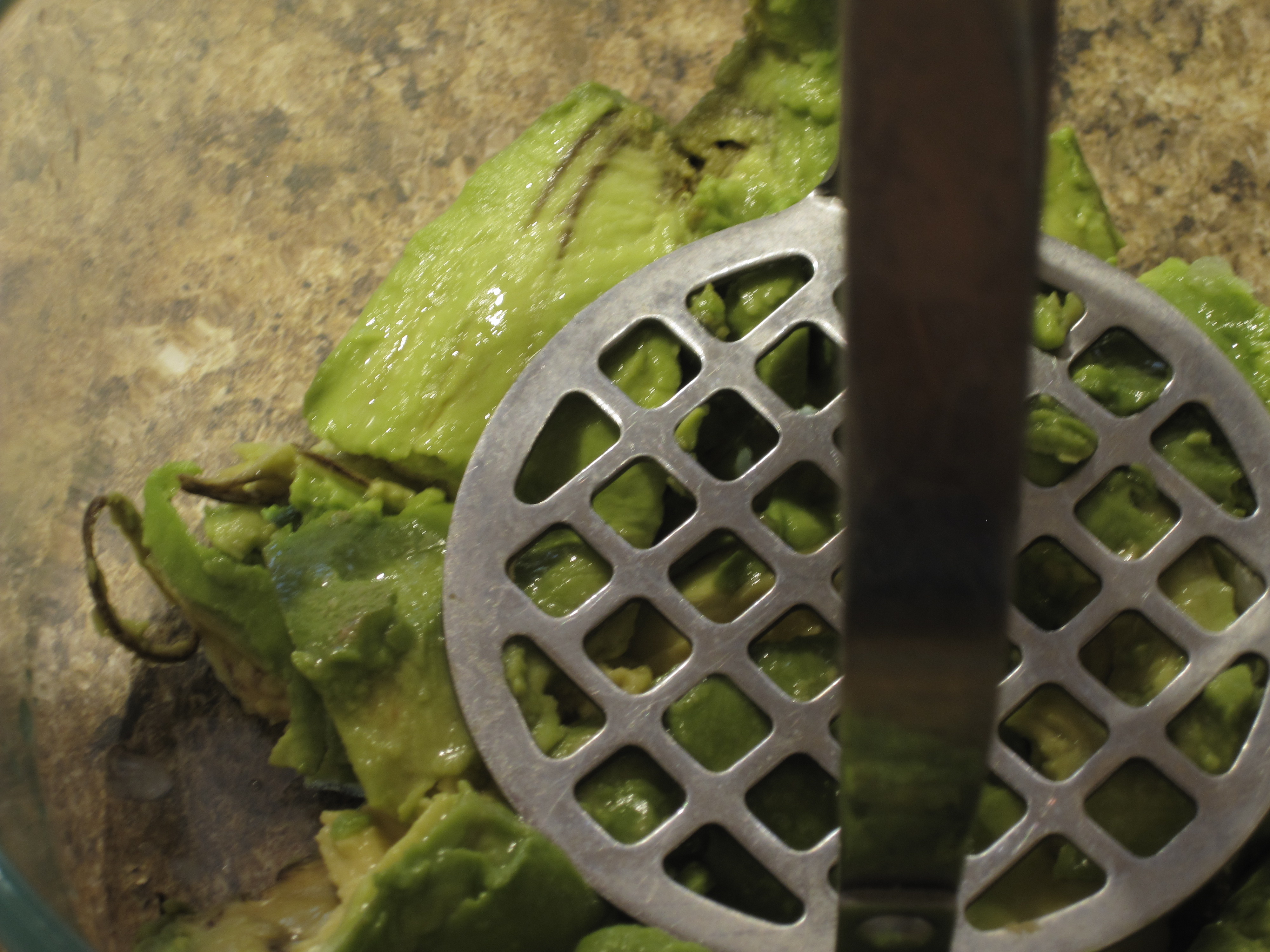
Limes are so pretty! I love them. They go hand in hand with avocados in my book and the citrus helps the avocado from turning brown. They also seem to help in the mashing process, as the acidity must break them down a bit.

So, after a good smashing, I added yogurt, half and half (you could use milk or cream if you prefer), garlic, onion, and salt and pepper. Oh, and  a dash of cayenne. The onion was grated- which created an interesting consistency and also left the house smelling like onion for a few hours, FYI. It was almost like onion pulp and helped distribute the flavor evenly and without adding much texture.

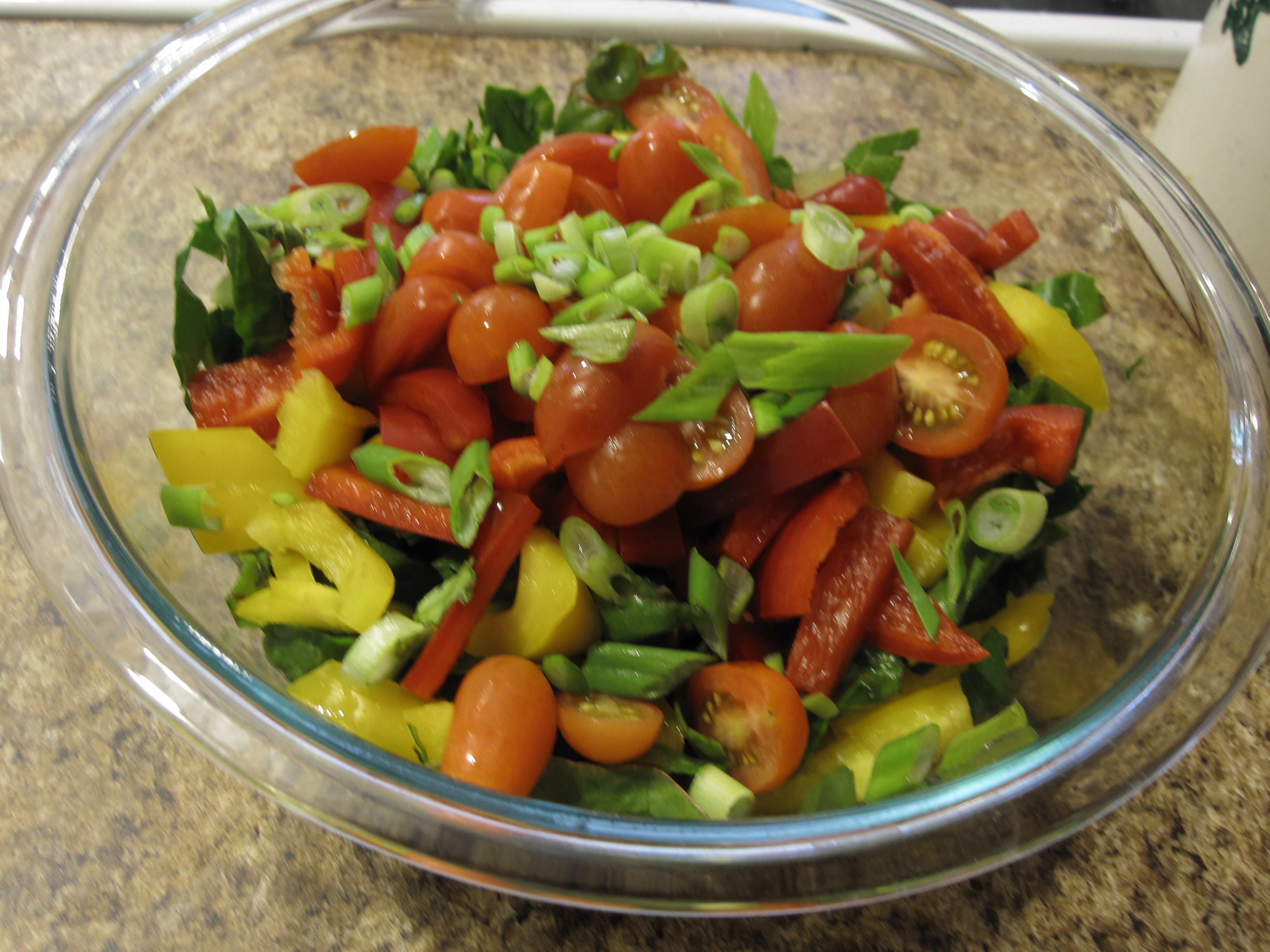
I wanted to make a festive salad full of color. I included romaine lettuce, rainbow chard, grape tomatoes, red and yellow bell peppers, and green onions. Twas delicious.

The salad dressing tasted extremely fresh and the flavor was pretty mellow. It lasted for another 1-2 days, but did start to turn brown by that point. It’s probably best served on the day you make it.


Recipe for Avocado Salad Dressing

Mango jalapeno chutney

Greg made this a couple weeks ago and it was packed with flavor and very easy to put together. We used it as a topping on broiled tilapia, which is a great use for it. It could also easily be served atop any other white fish, chicken or even pork. It would also be great with tortilla chips as a dip. All in all, this is a fun little salsa to make.

fresh mango!

jalapenos for some heat and crunch

red onions add some great color to the chutney

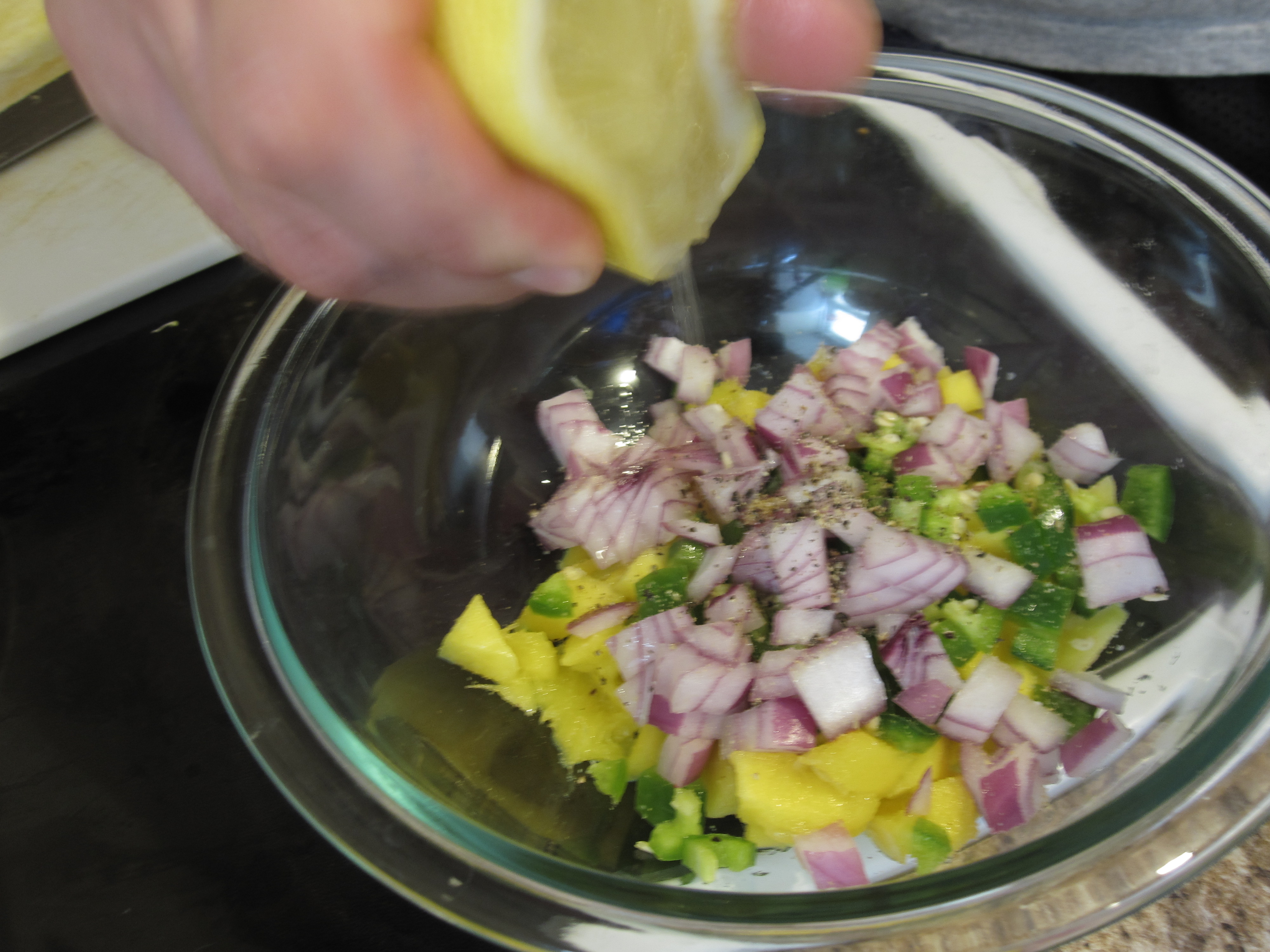
and some citrus for acidity

serve it atop whatever you please!

Recipe for Mango Jalapeno Chutney

Greek Feast!

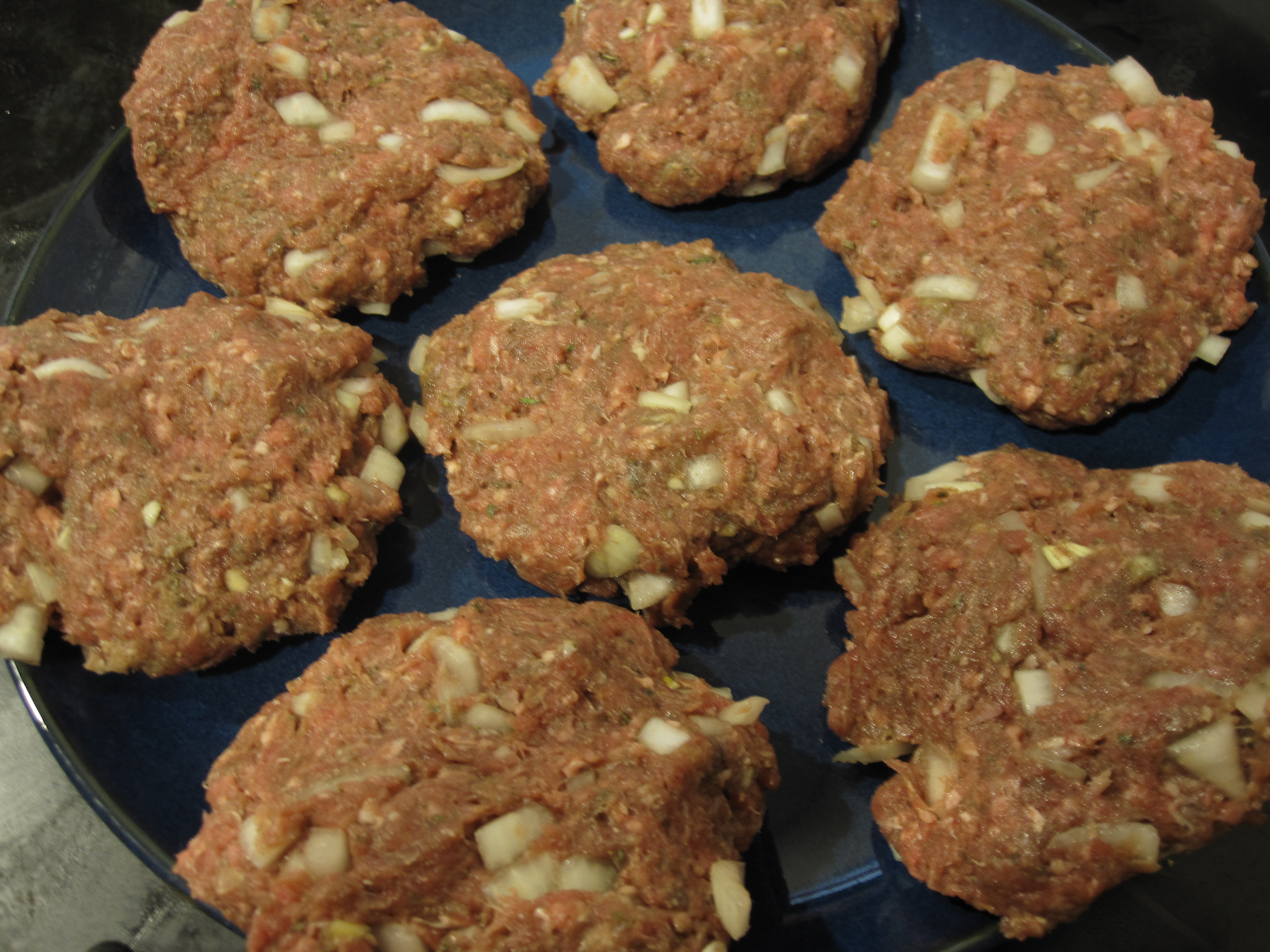
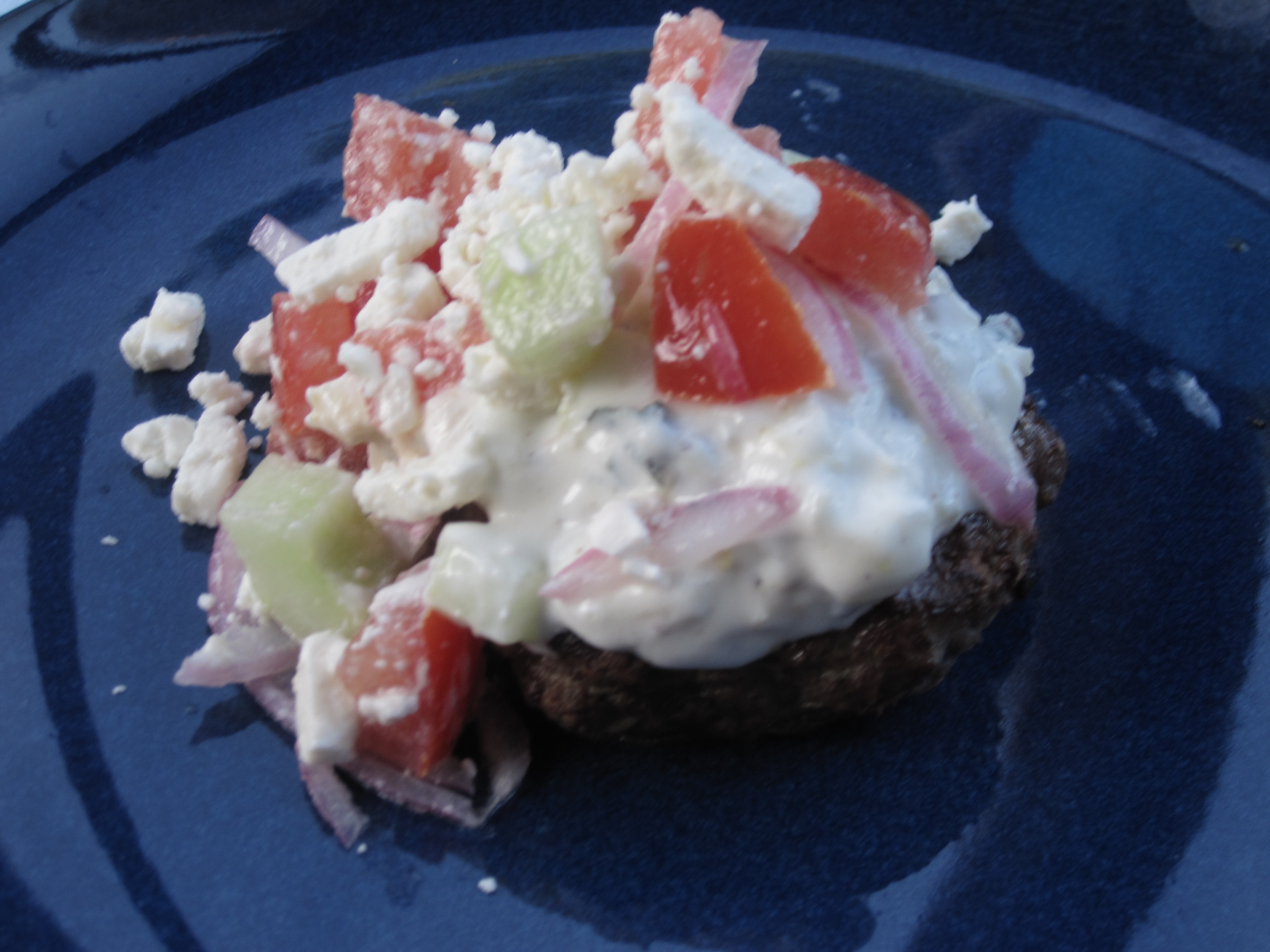
If you are a fan of Greek food I am pretty sure you will really like this meal. It is relatively easy to prepare and the flavors are intense and extremely satisfying. We made gyro burgers, which were composed of ground beef and lamb as well as some traditional Greek spices. We also prepared homemade tzatziki sauce and  a Greek salad of tomato, cucumber, red onion and fete cheese. It all went well together and you could also serve the burgers in a pita or flatbread if you so desired.

I will begin with the tzatziki sauce, which is a traditional sauce served with gyros that is made with yogurt and cucumber and is awesome.

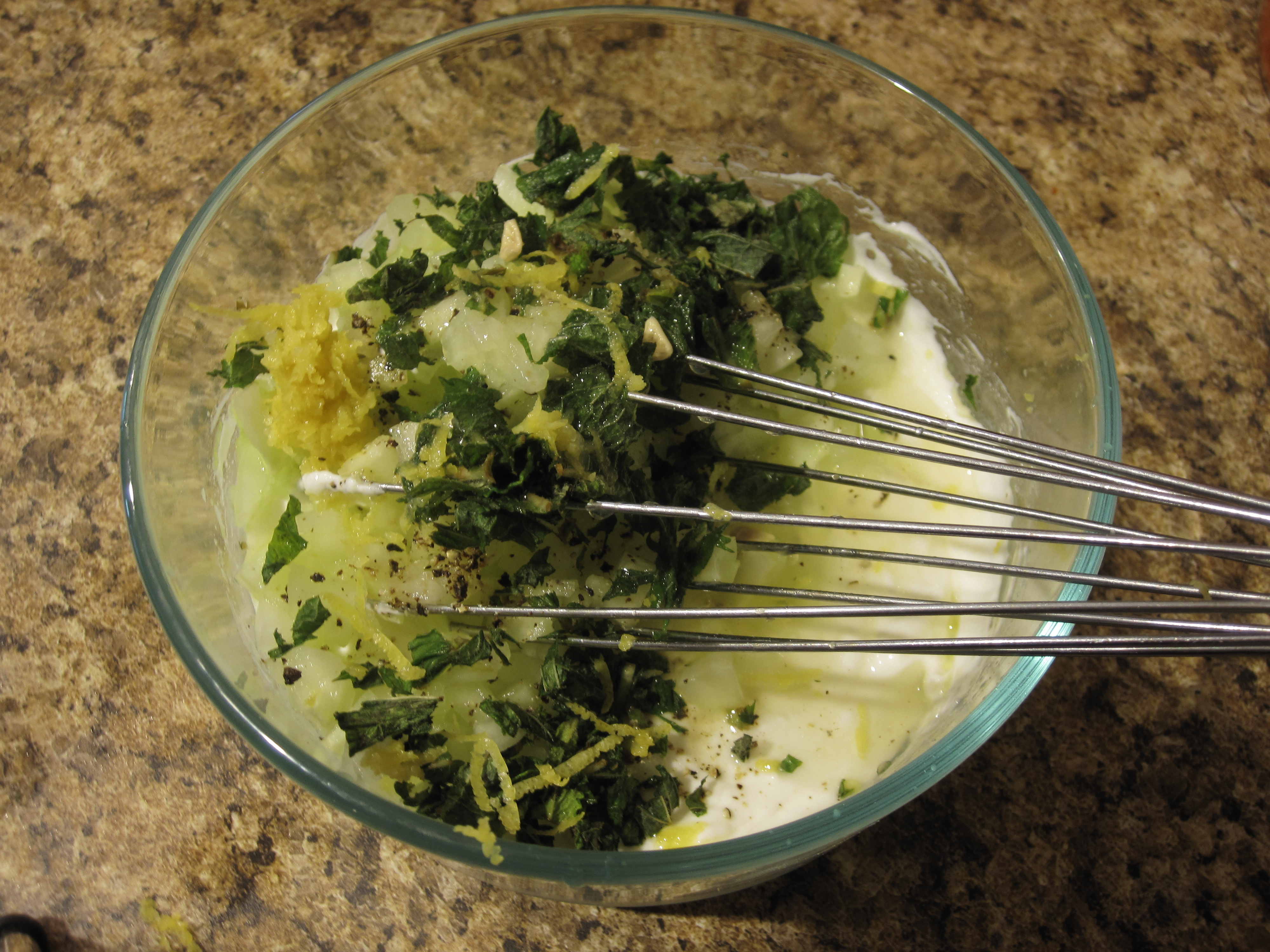
The key ingredient here is mint. Luckily mint grows like weeds and we have plenty growing outside!

I just combined all the ingredients and let it chill in the refrigerator while we prepared the rest of the meal. Below is a pic of the final product. Not only is this a great sauce to put on whatever you please, really, but can also be served as a dip with pita or veggies. It is so good.

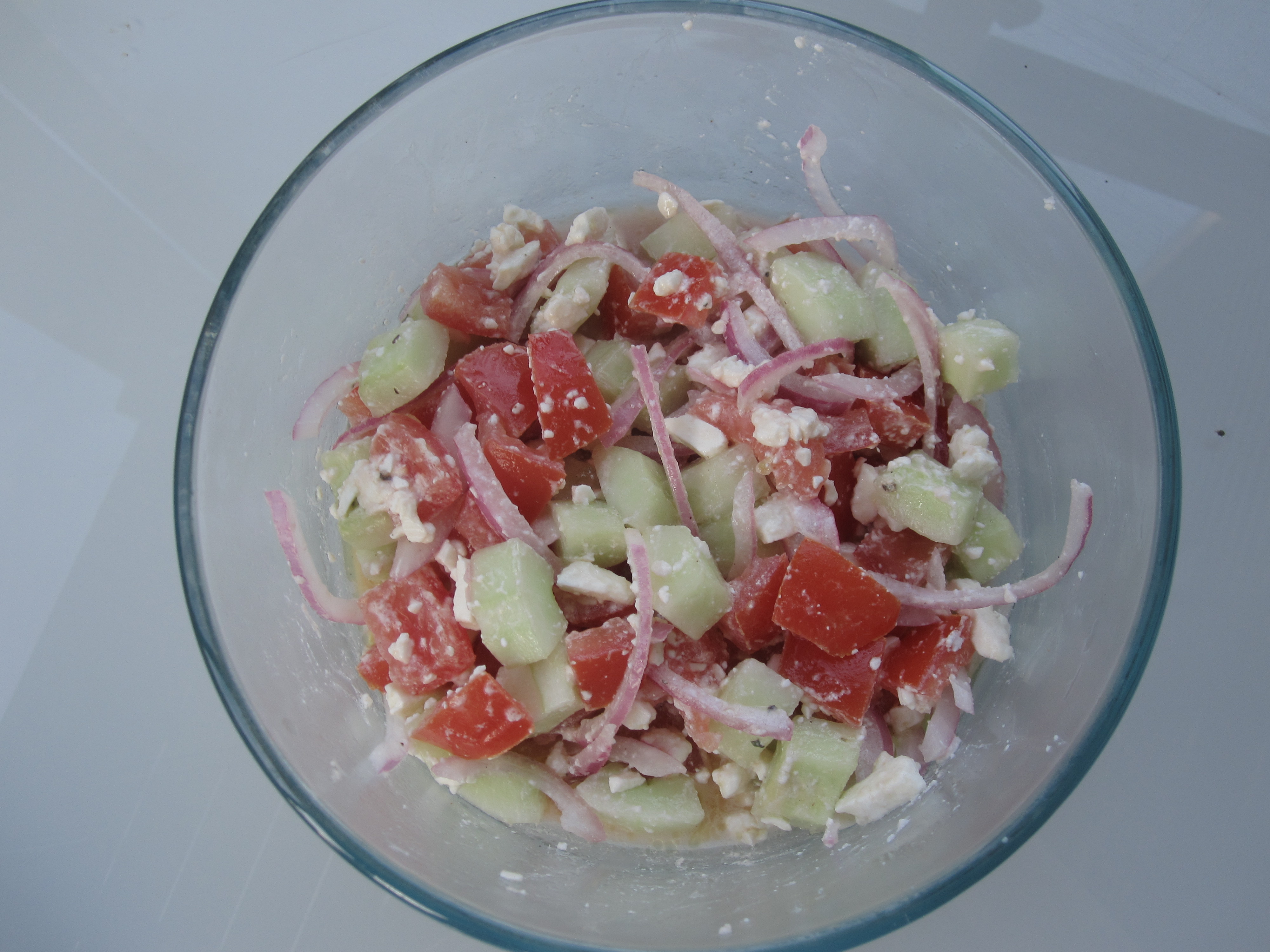
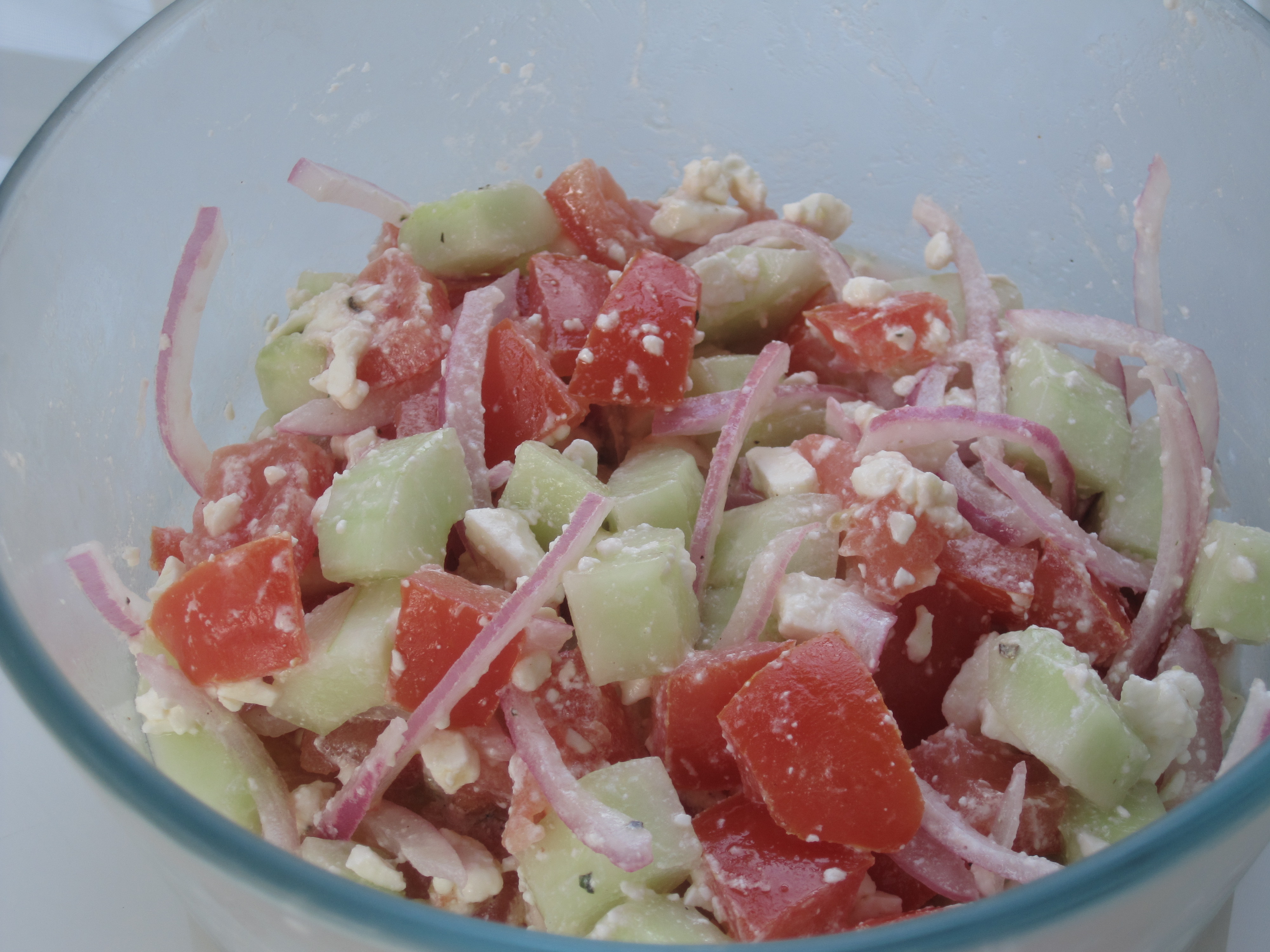
Along with the burgers we also prepared a Greek salad. I love this salad, especially in the summer when the vegetables are nice and fresh. It is a great accompaniment to any meat, really, and goes particularly well with the strongly flavored lamb.

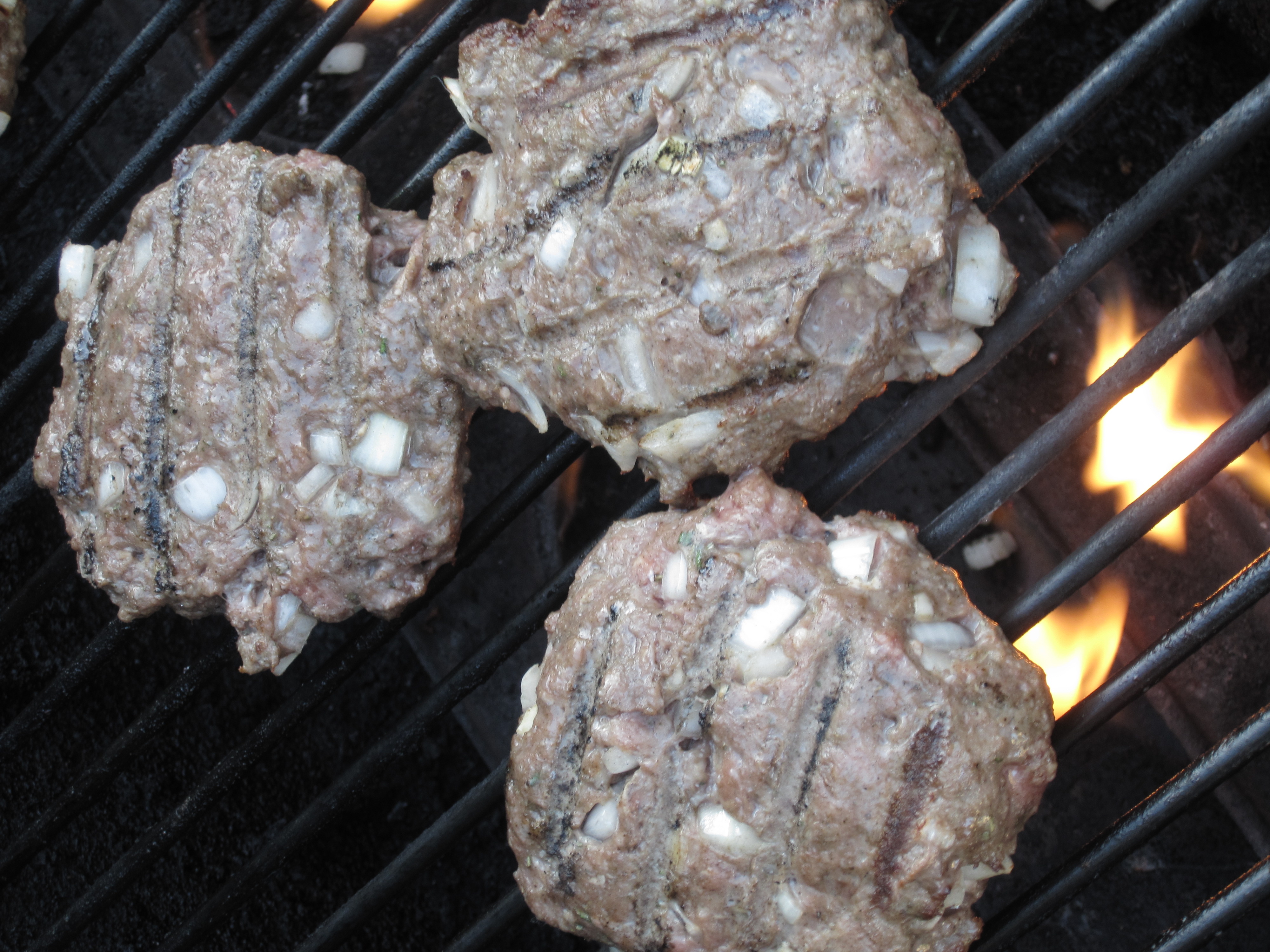
Now, on to the burgers! I’ll let the pictures do the talking here….

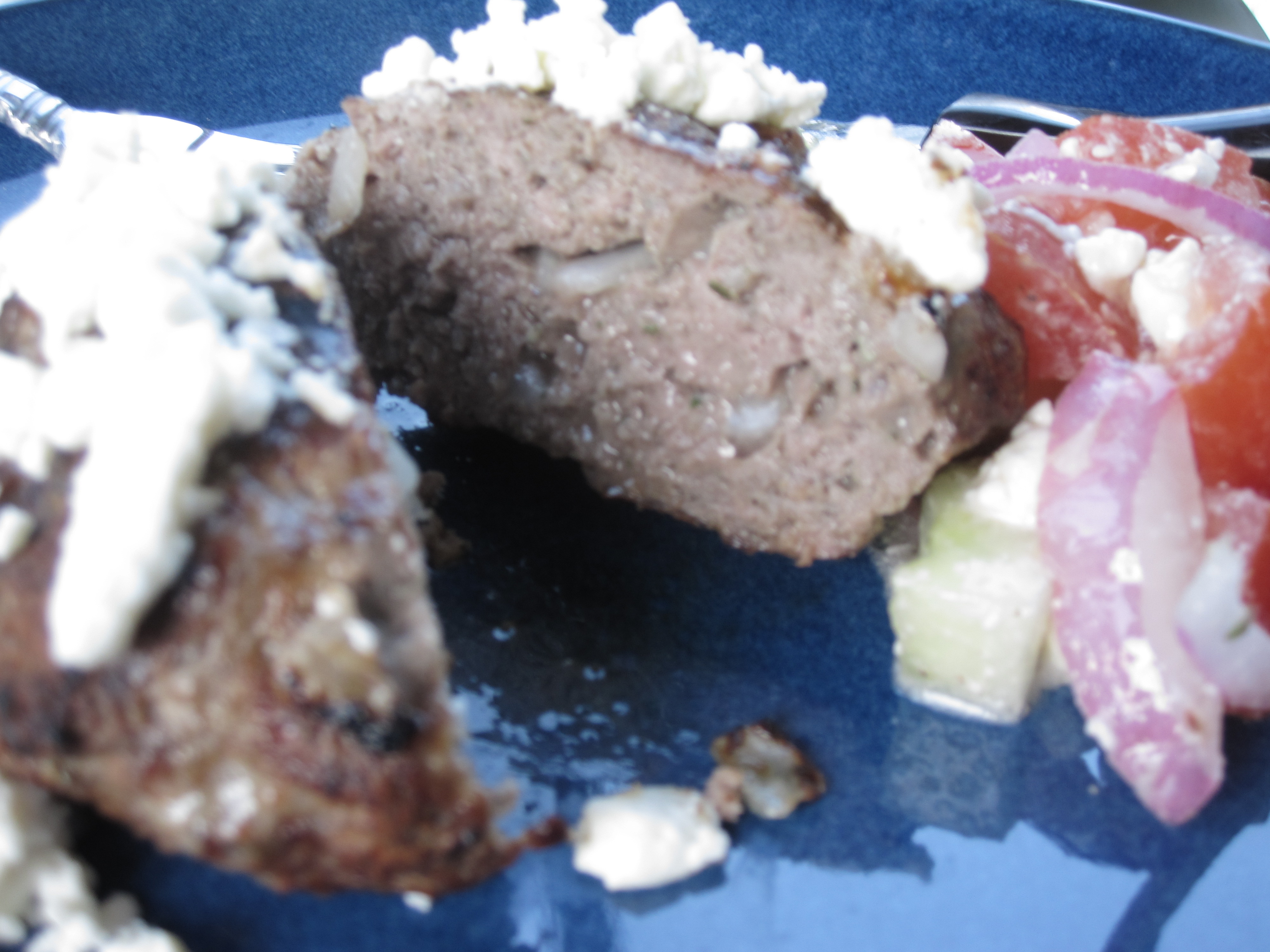
The meat had a gyro like consistency as you can see below (sorry, it’s a bit blurry) and of course the flavor was right on.

Give this one a try!

Recipe for Gyro Burgers

Tzatziki

Greek Salad

Eggplant “lasagna”

This one’s for you Jeremy! I decided to make a pasta-less lasagna to please one of our biggest supporters, who had requested a lasagna recipe. Just for the record, this recipe could easily be duplicated with actual lasagna noodles in place of the eggplant. Though, I have to say this is a nice alternative if you like eggplant like me. In the past I have sometimes struggled to make tasty eggplant dishes at home, as sometimes the eggplant can be bitter, the skin off-putting, and the seeds crunchy and irritating. Since I like eggplant so much though, I have continued to try to make it and feel that this dish was a success.

I began by slicing the eggplant as thin as I could. I worked with a sharp knife and took my time. A mandolin probably would have worked a lot better in terms of getting consistency in thickness, but I don’t have one of those so I did the best I could.

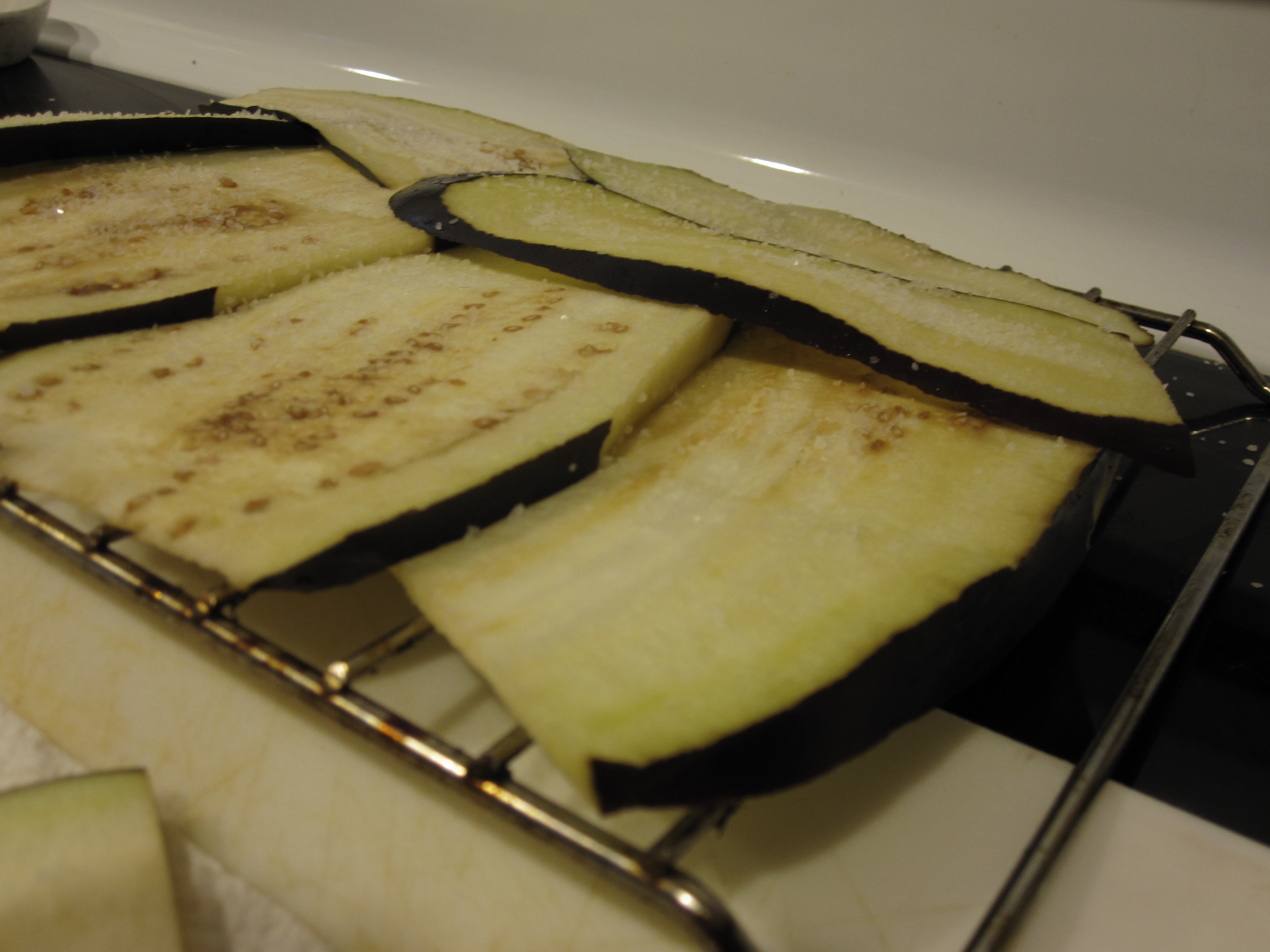
I placed the eggplant slices on racks (two from my toaster oven) and the remaining pieces on a paper towel. I generously covered them in kosher salt and let them sit for about an hour.

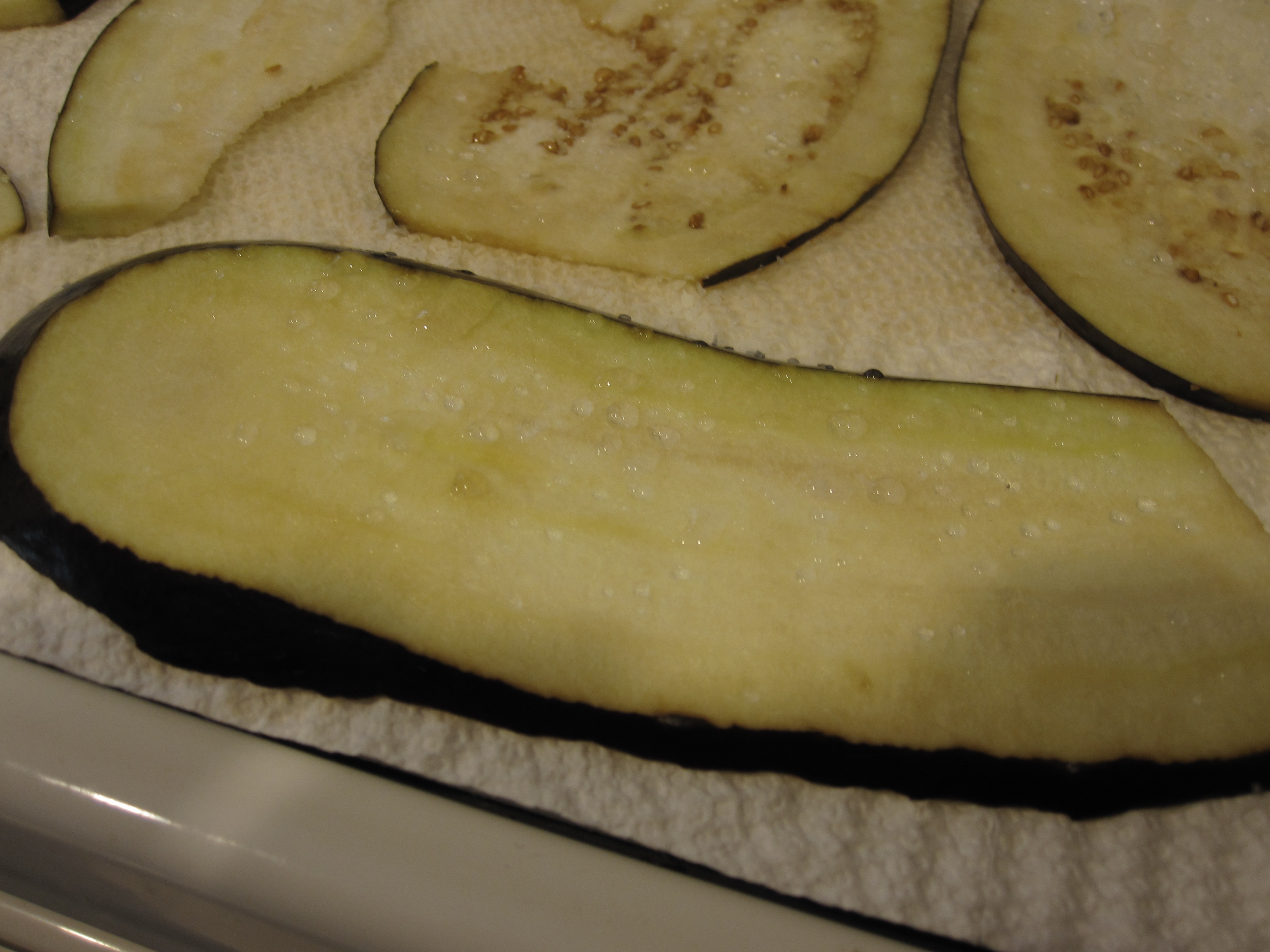
The salt pulls out the bitter juices (remember what salt does to cells? wahoo, high school chemistry!), which I rinsed off along with the salt.

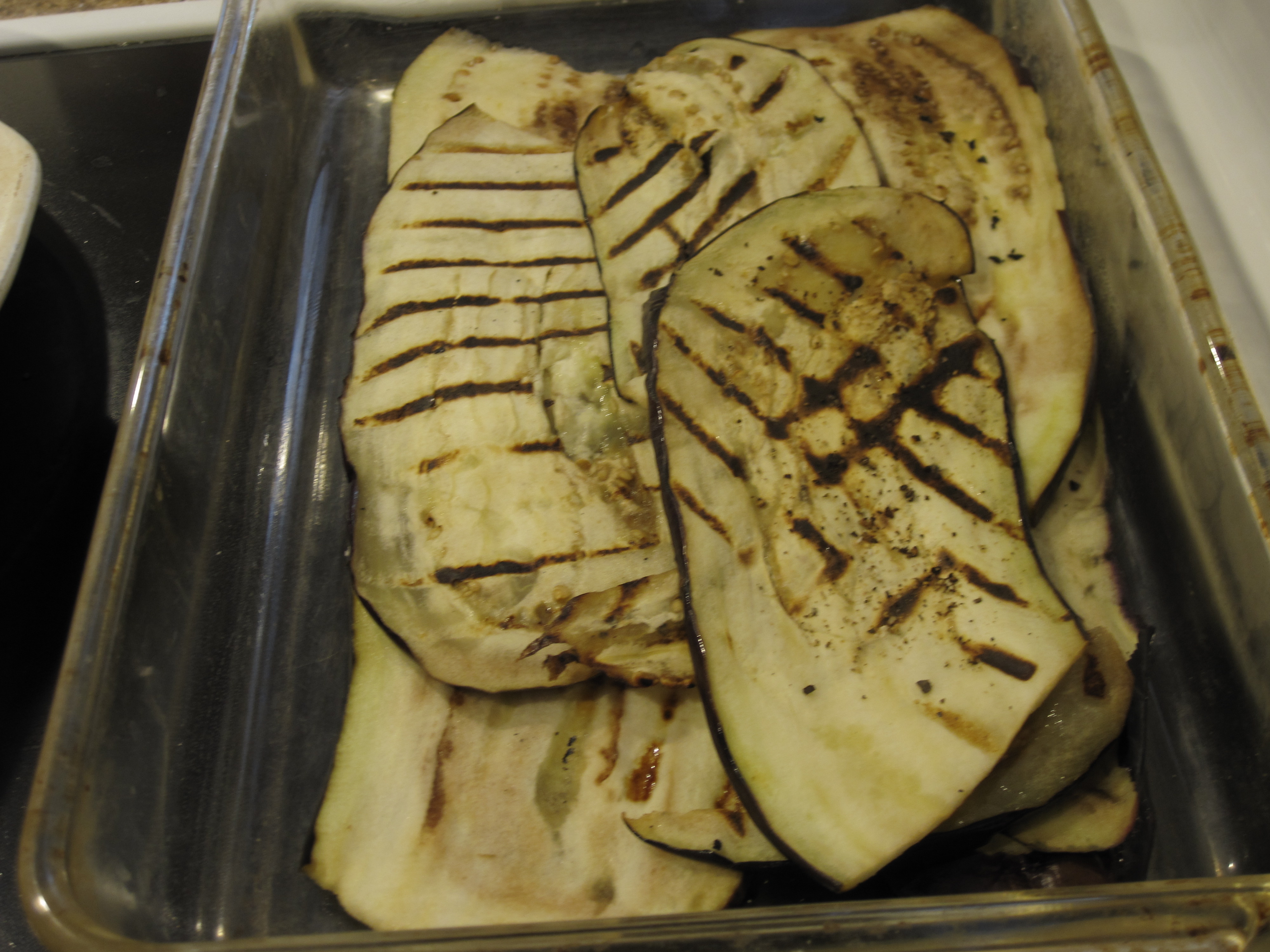
Next, I wanted to cook the eggplant a little bit so it wouldn’t make the dish too soupy. I used a grill pan, which I coated generously with olive oil so the slices wouldn’t stick. I seasoned about 1/2 of the slices with salt and pepper as they cooked. They only needed about 2-3 minutes per side, depending on the thickness. This left some beautiful grill marks!

I also grilled up some baby bellas for some extra filler and added veggie-ness.

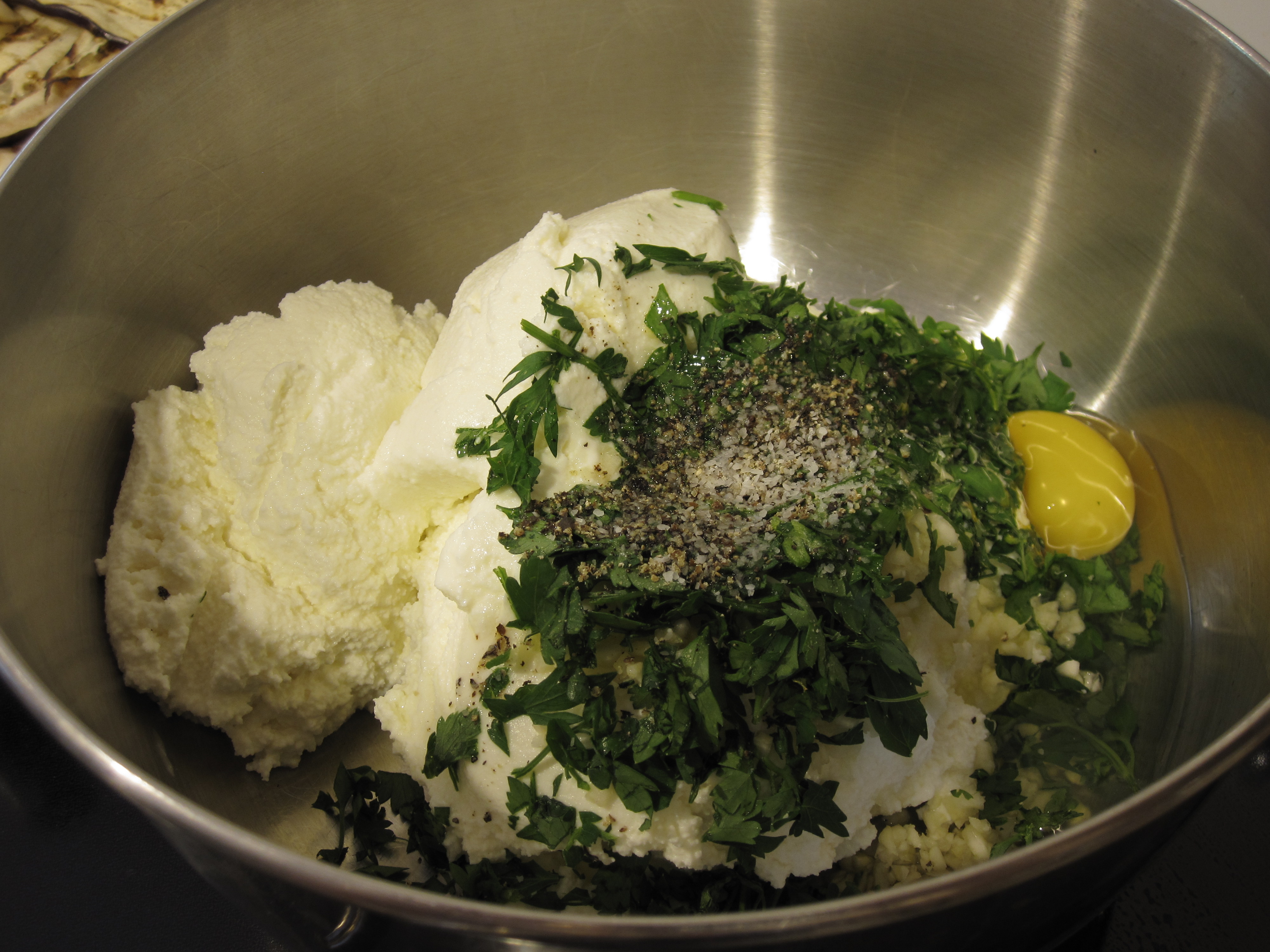
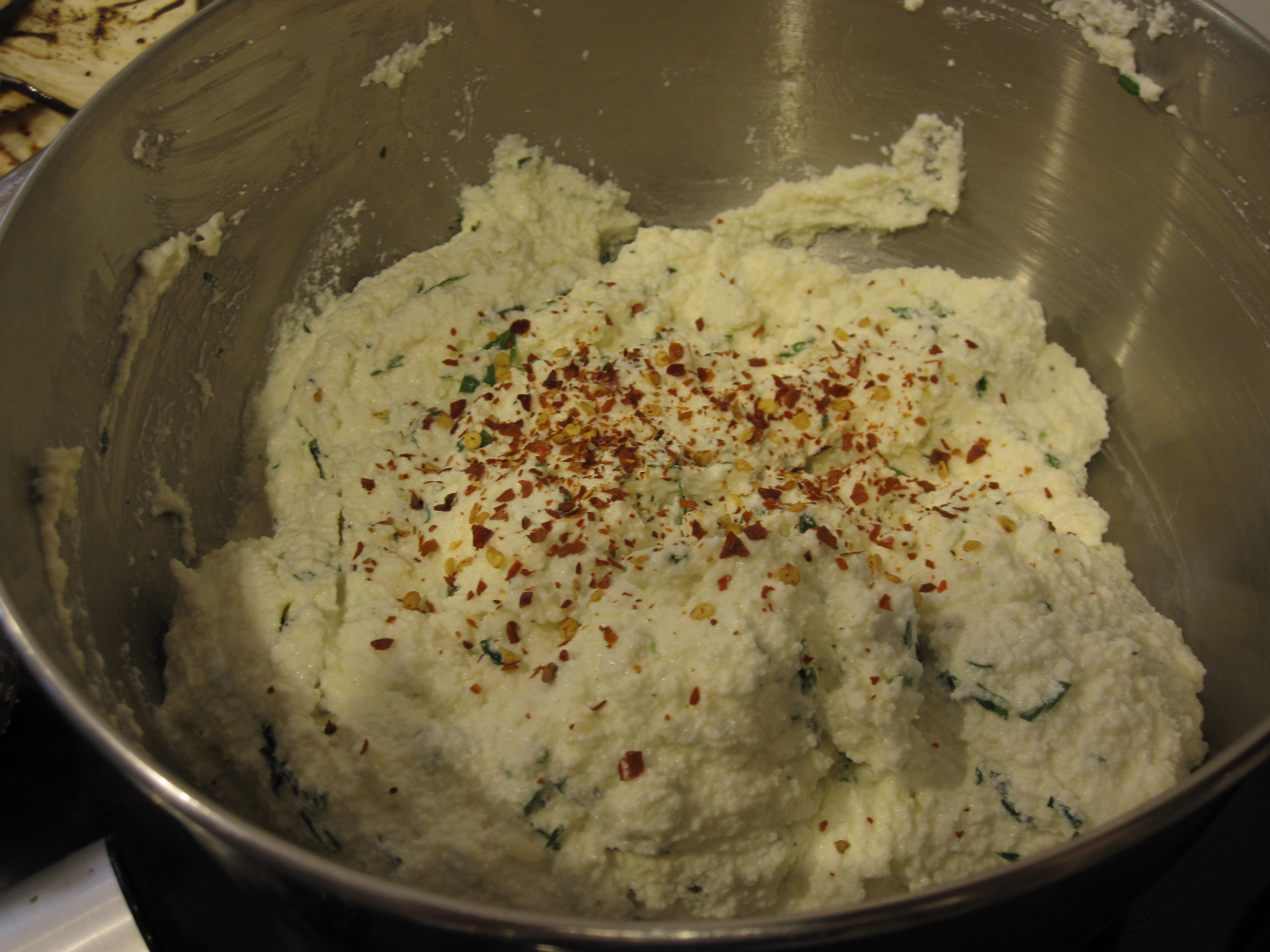
As the grilling went on, I also made my ricotta filling. I LOVE ricotta and always use it when making lasagna. Some people have told me about using cottage cheese, but I’ve never tried it. I usually buy part-skim ricotta and it’s delicious. To the ricotta, I added an egg, some fresh garlic and parsley, salt and pepper and some chili flakes for a little kick.

Alright. Now it’s time to assemble the lasagna. If you want to go the traditional route using lasagna noodles, cook the noodles according to the directions on the box. In this recipe when you see eggplant slices, substitute that for the lasagna noodles. Easy as pie.

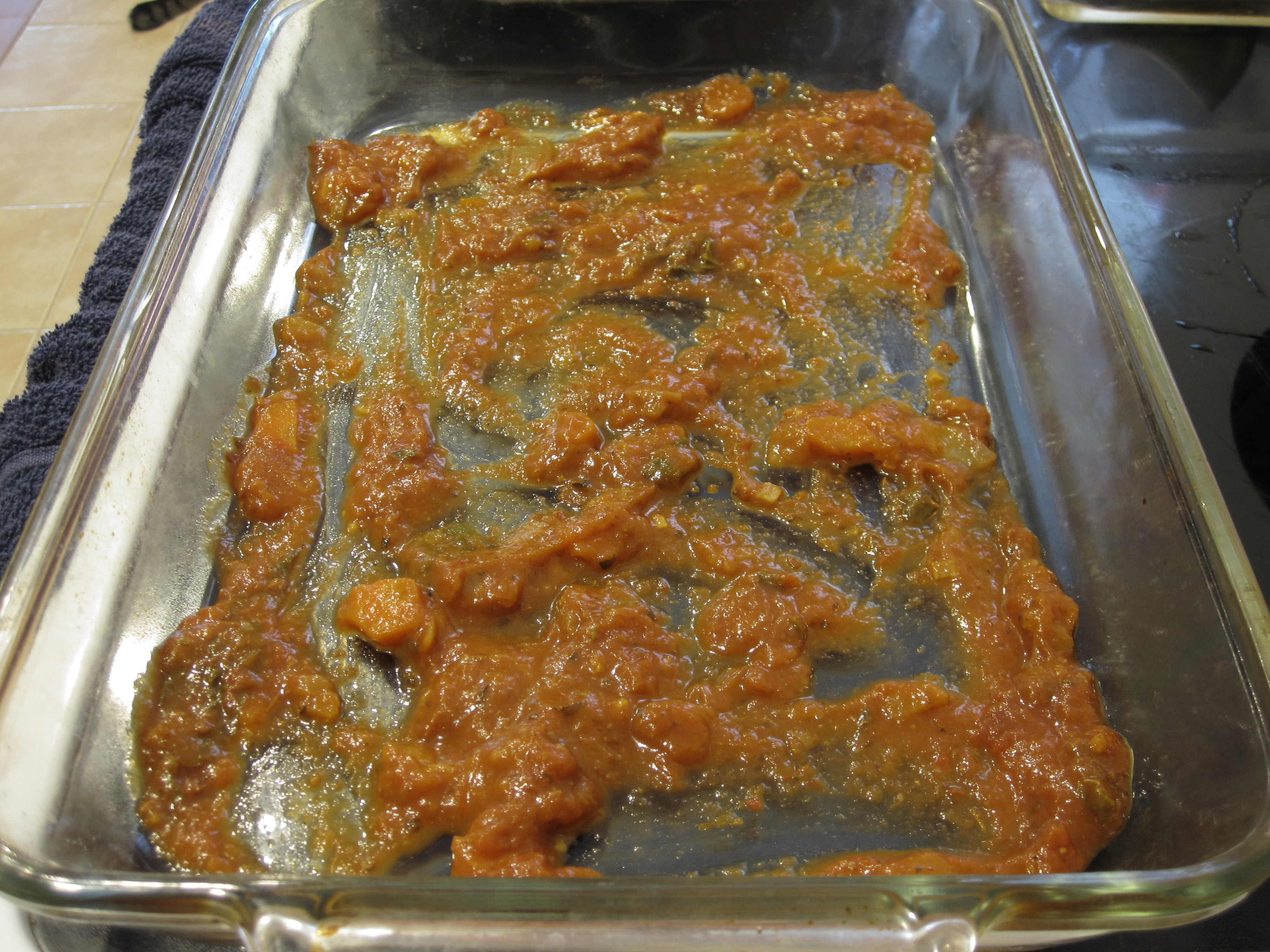
Step 1: Layer the bottom of the pan with tomato sauce. I used the leftover marinara that I made several weeks ago, but store bought is fine too.

Step 2: On top of the sauce, create a layer of eggplant slices.

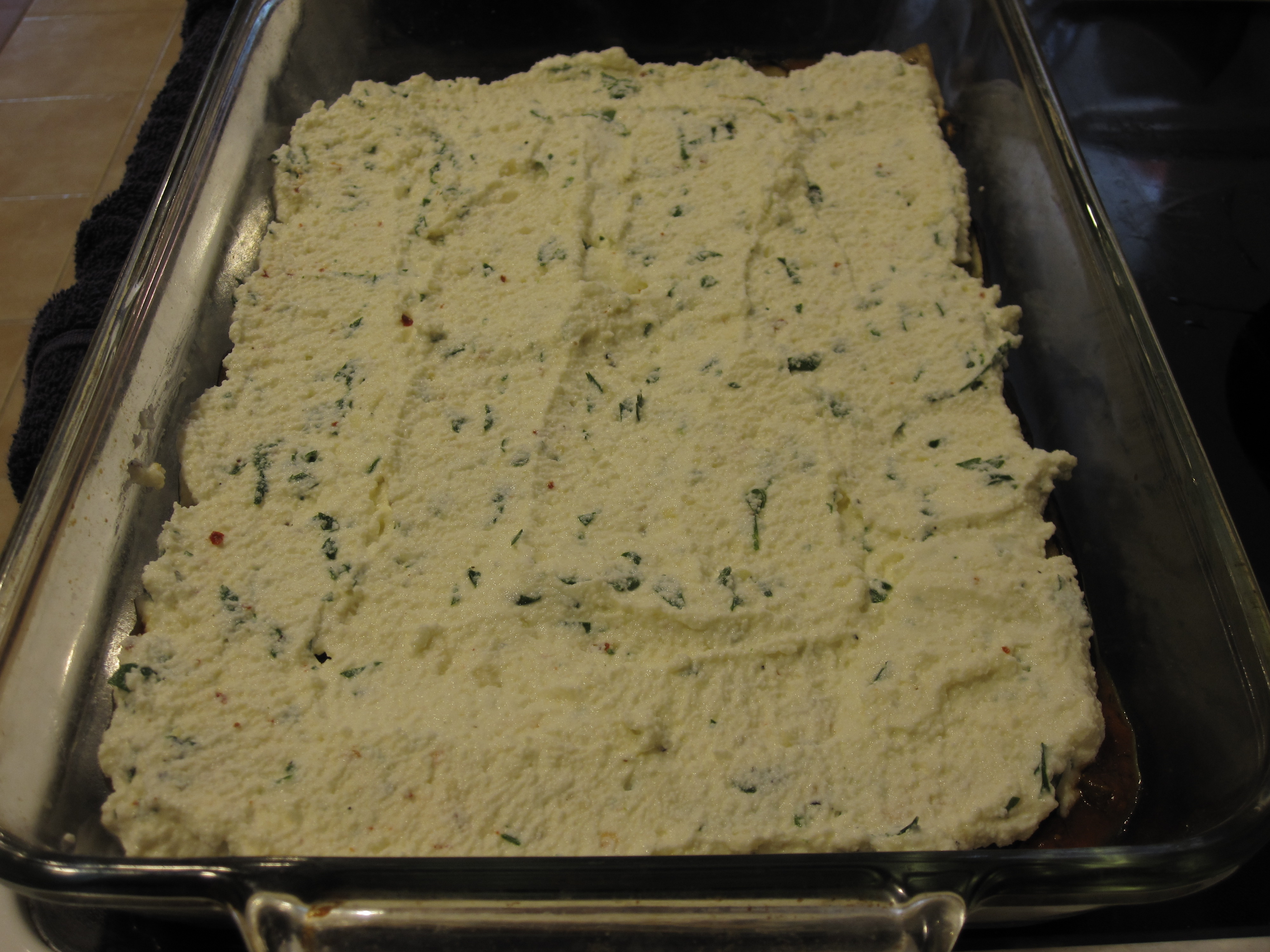
Step 3: Ricotta layer. Spread ricotta mixture all over eggplant slices, creating a thick layer.

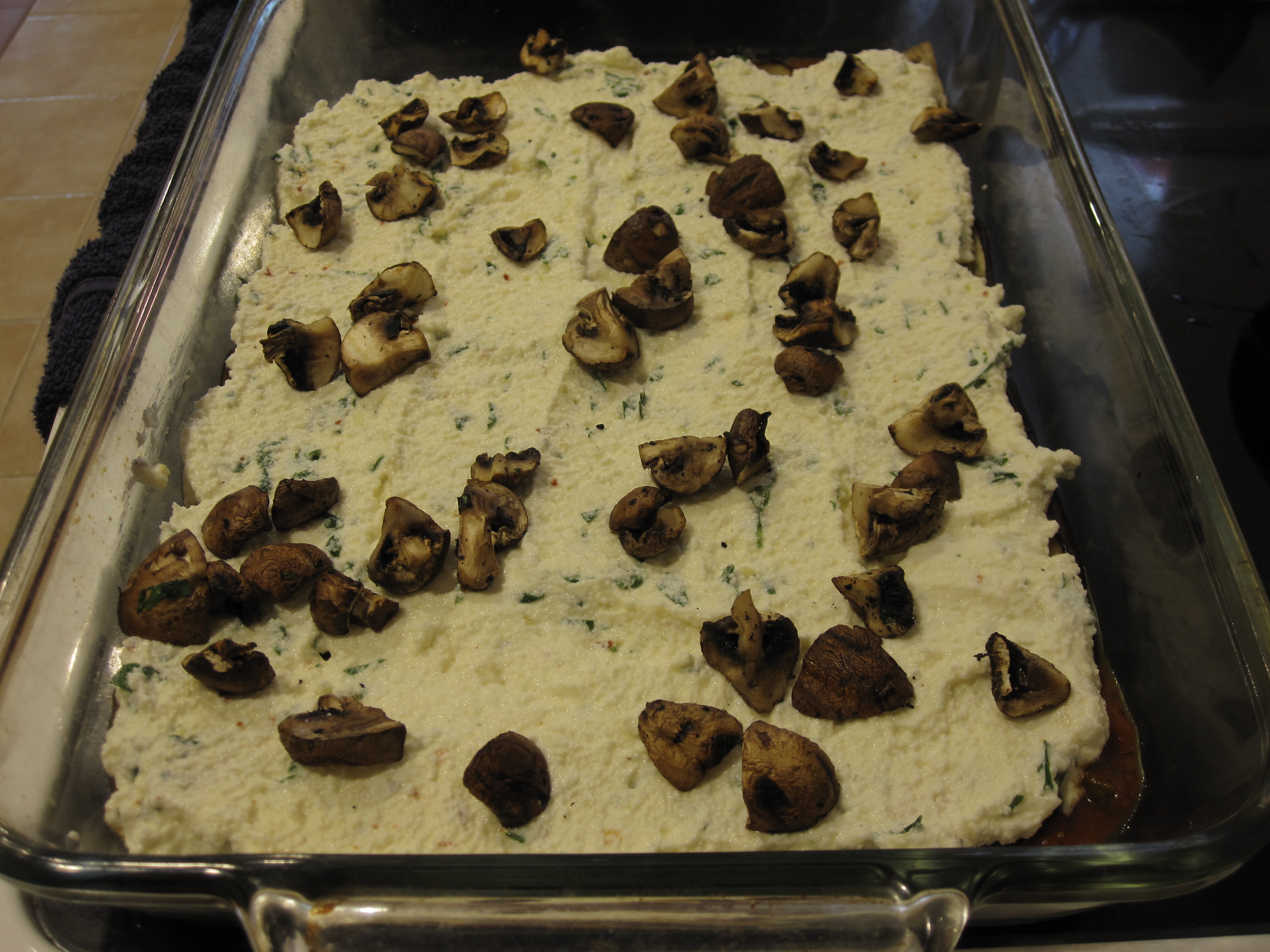
Step 4: I threw the mushrooms on at this point. If you wanted to add meat or other veggies, you could add them here.

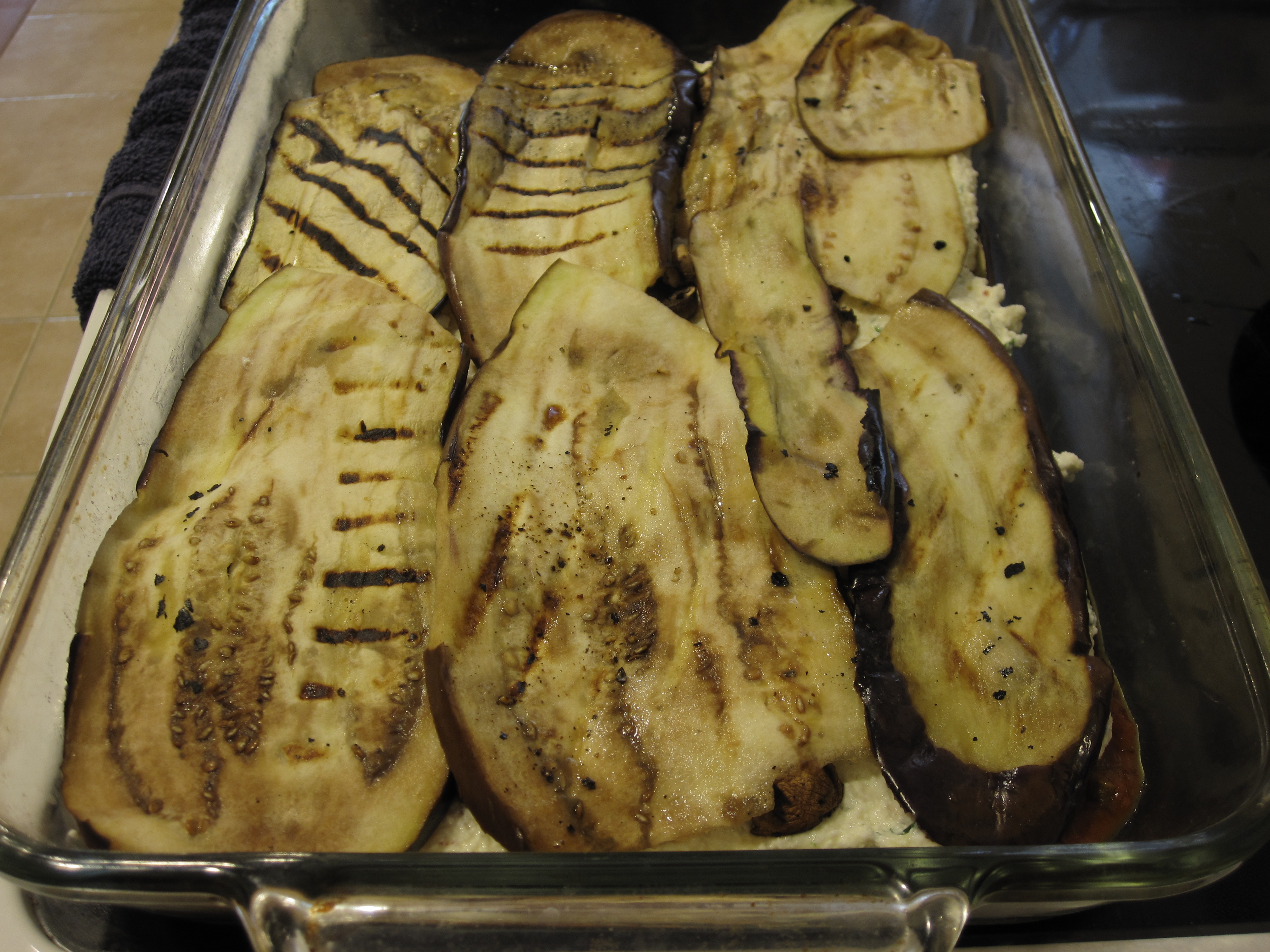
Step 5: Add another layer of eggplant slices.

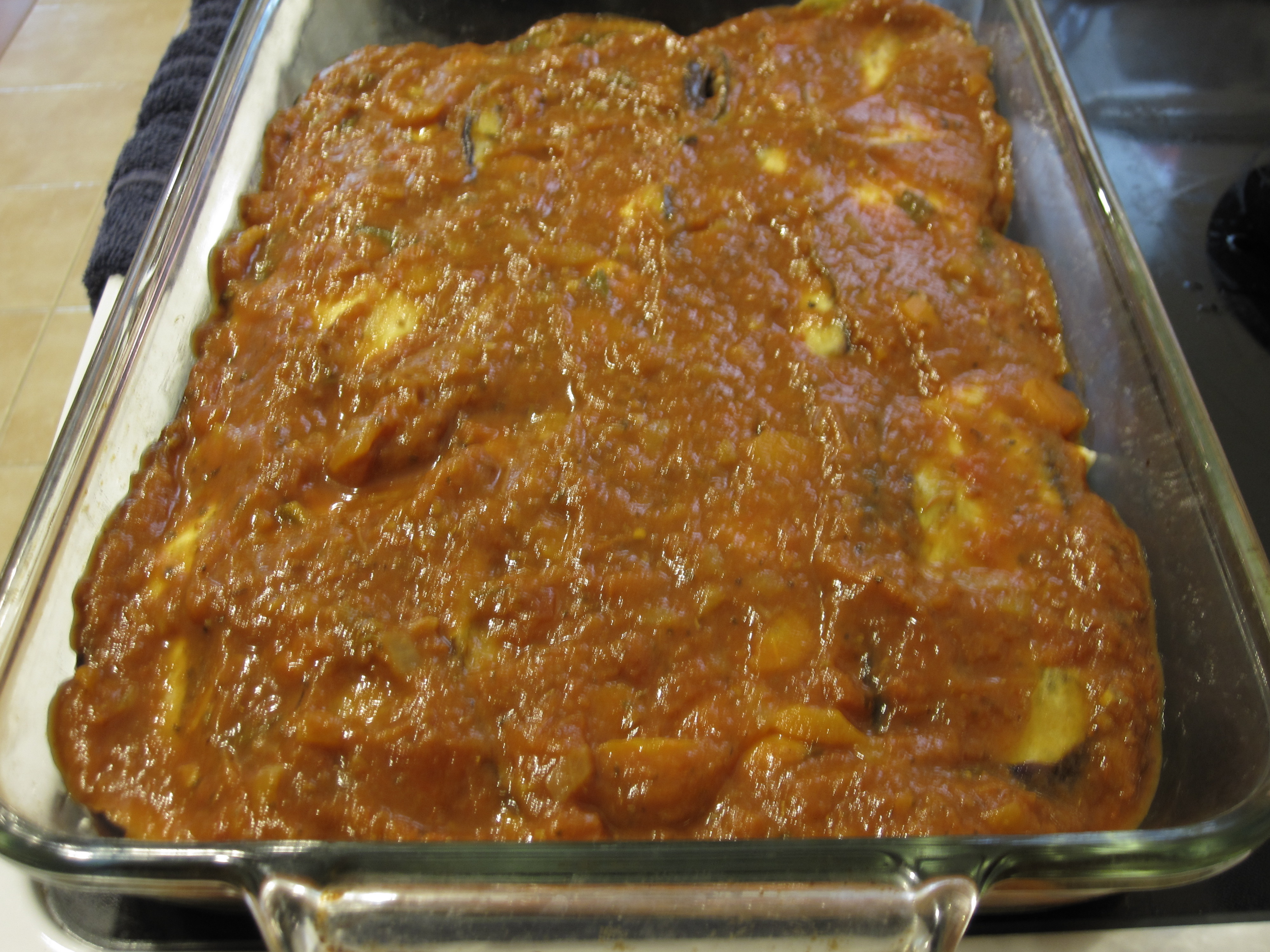
Step 6: Add another layer of sauce.

Step 7: And then a layer of cheese.

That’s about it for the assembly of it

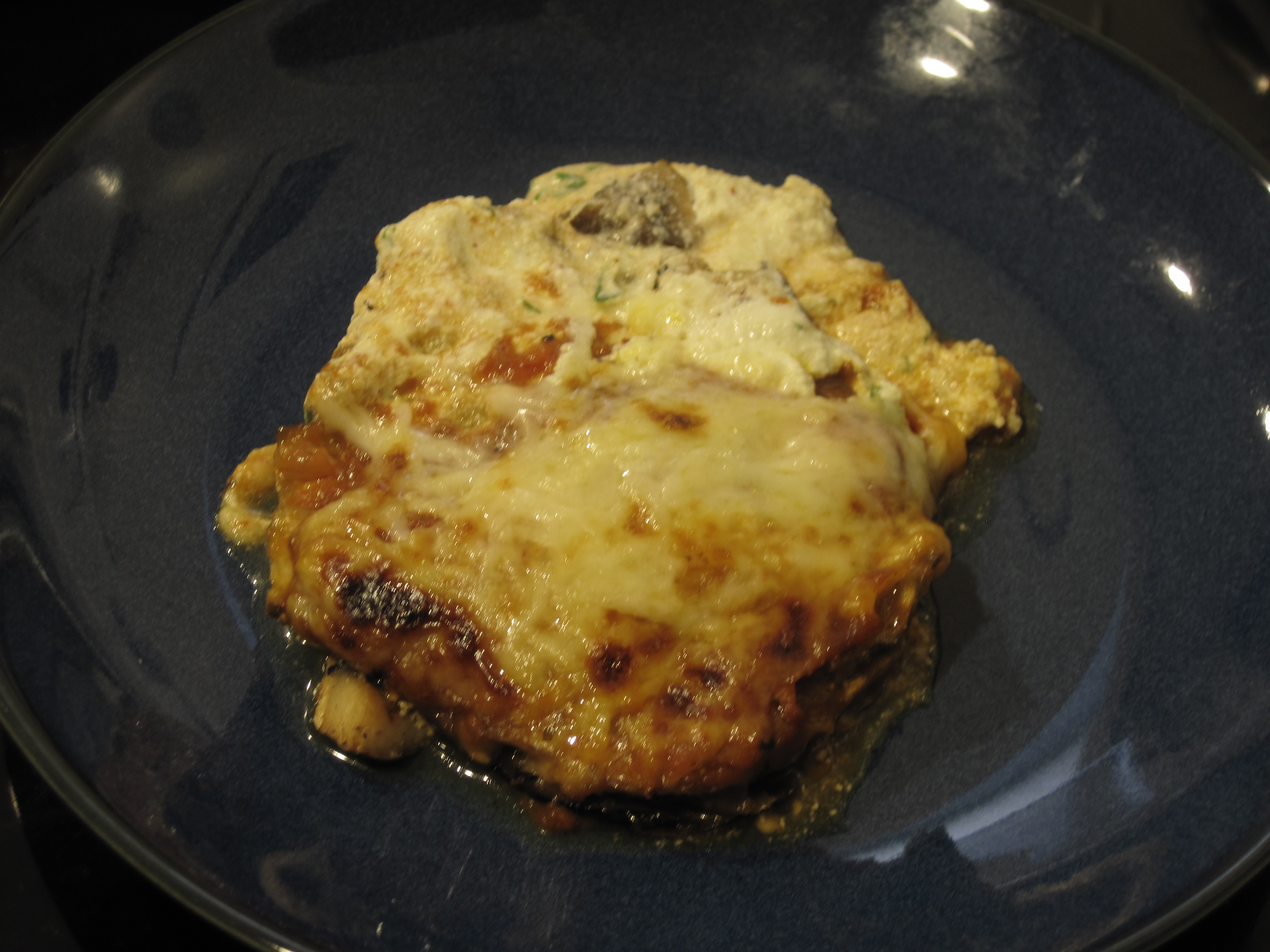
After it bakes it’s all cheesy/melty/gooey so let it sit before cutting it.

I couldn’t wait that long, so it was a little goopey, but still delicious!

Recipe for eggplant “lasagna”

Recipe for our basic marinara

Grilled Balsamic Flank Steak

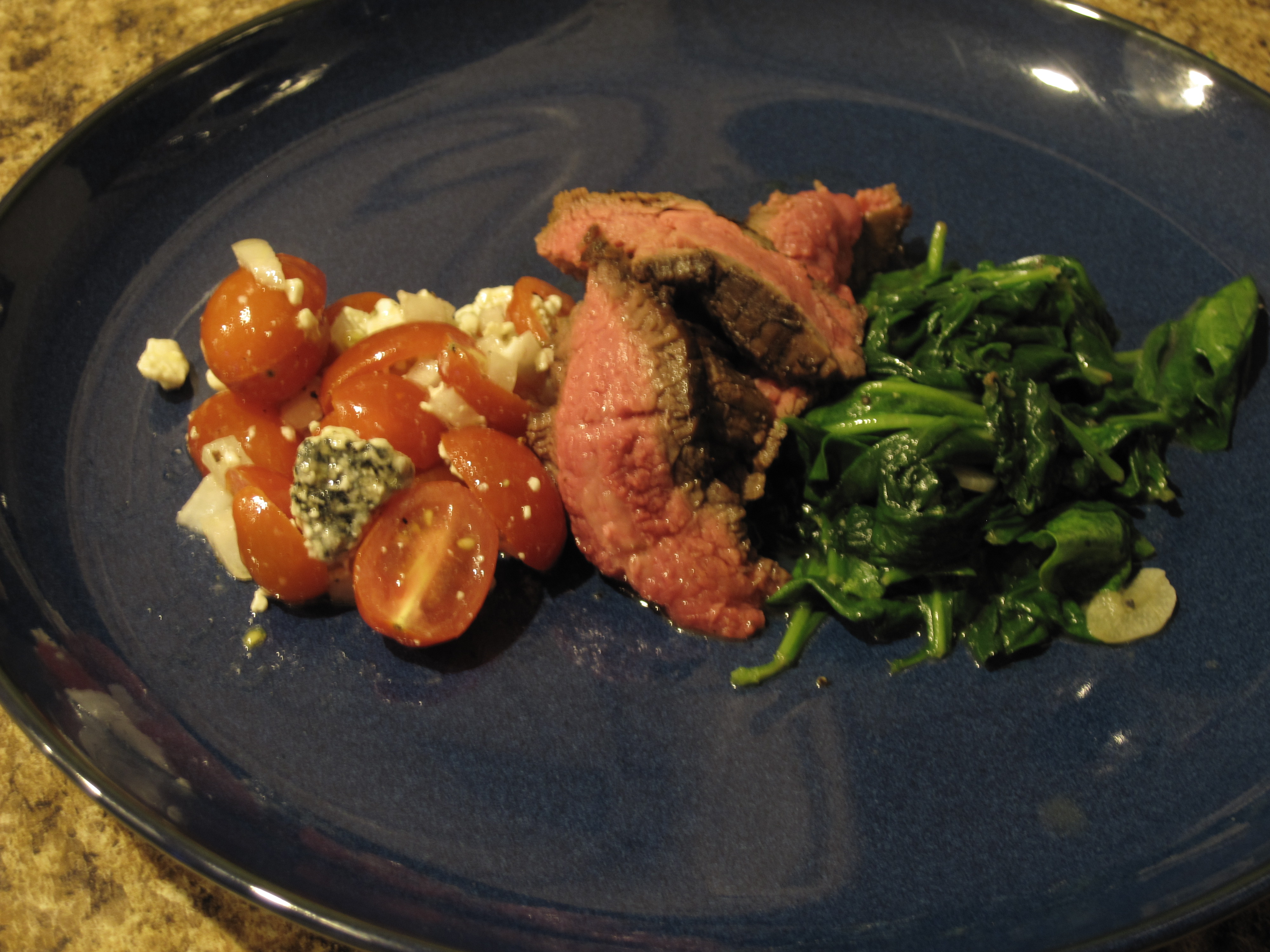
As I flipped through the May issue of Cooking Light I came across recipes for grilled balsamic skirt steak with accompanying sides of tomato, onion and blue cheese salad and garlic sauteed spinach. In! Love at first sight. I felt pretty confident this meal would be a winner and it really was! It’s a great summer time meal and has that complexity and flavor to it that would make any guest think you spent hours in the kitchen, though you secretly know just how easy it was.

For our version of this recipe, we used flank steak instead of skirt steak, since that was what we had in the freezer. For those keeping tabs, it was a beautiful grass-fed flank steak from Trader Joes, Yum.

The marinade for the steak was a little on the sweet side. The ingredients include balsamic vinegar, Worcestershire, brown sugar and garlic. The flavors of the marinade were probably my least favorite part of this meal, ironically though it was what drew me to the recipe in the first place. Next time I think I will go with a standard teriyaki or soy marinade. I like the salt, what can I say. Still though, steak is steak, and so it was still awesomely delicious. The great flavor was intensified by Greg’s masterful slicing- diagonal, across the grain, and very thin- which created extremely tender, melt in your mouth bites of steak. (A true testament to this was that the steak was even good and tender the next day, cold, on a salad!)

In addition to the mouth watering steak, were the fabulous sides that accompanied it. Simple, yet delicious.

The spinach, which I dubbed ‘garlicky spinach’ (so creative, I know), could not be easier to make but tasted so good. We have spinach pretty frequently and often saute it. But for some reason, this spinach was above and beyond what we typically have. It included thinly sliced garlic that first cooked in butter. mmm.

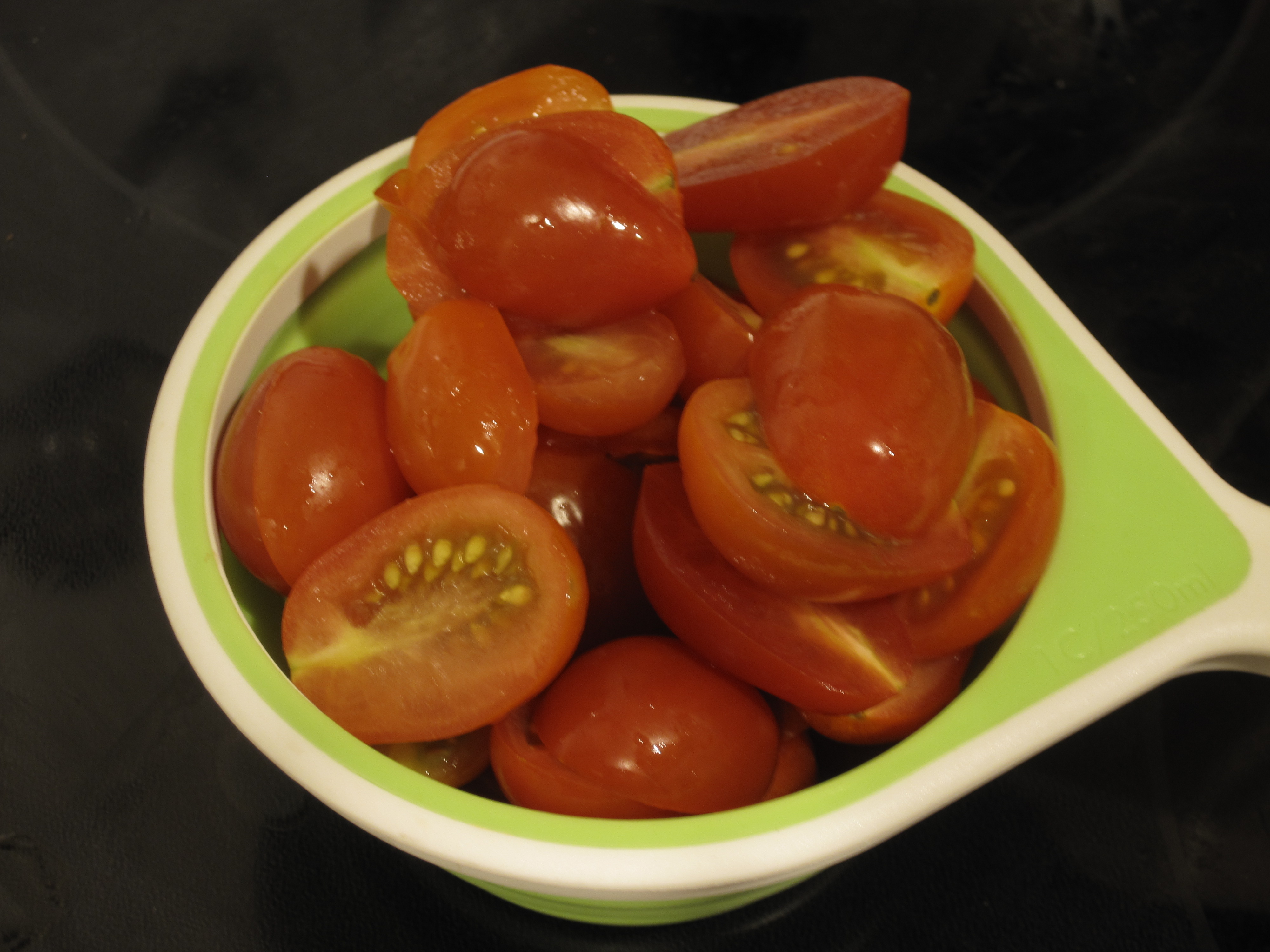
The other side was incredible and so easy to make! Some halved grape tomatoes….

…some minced vidalia onion…

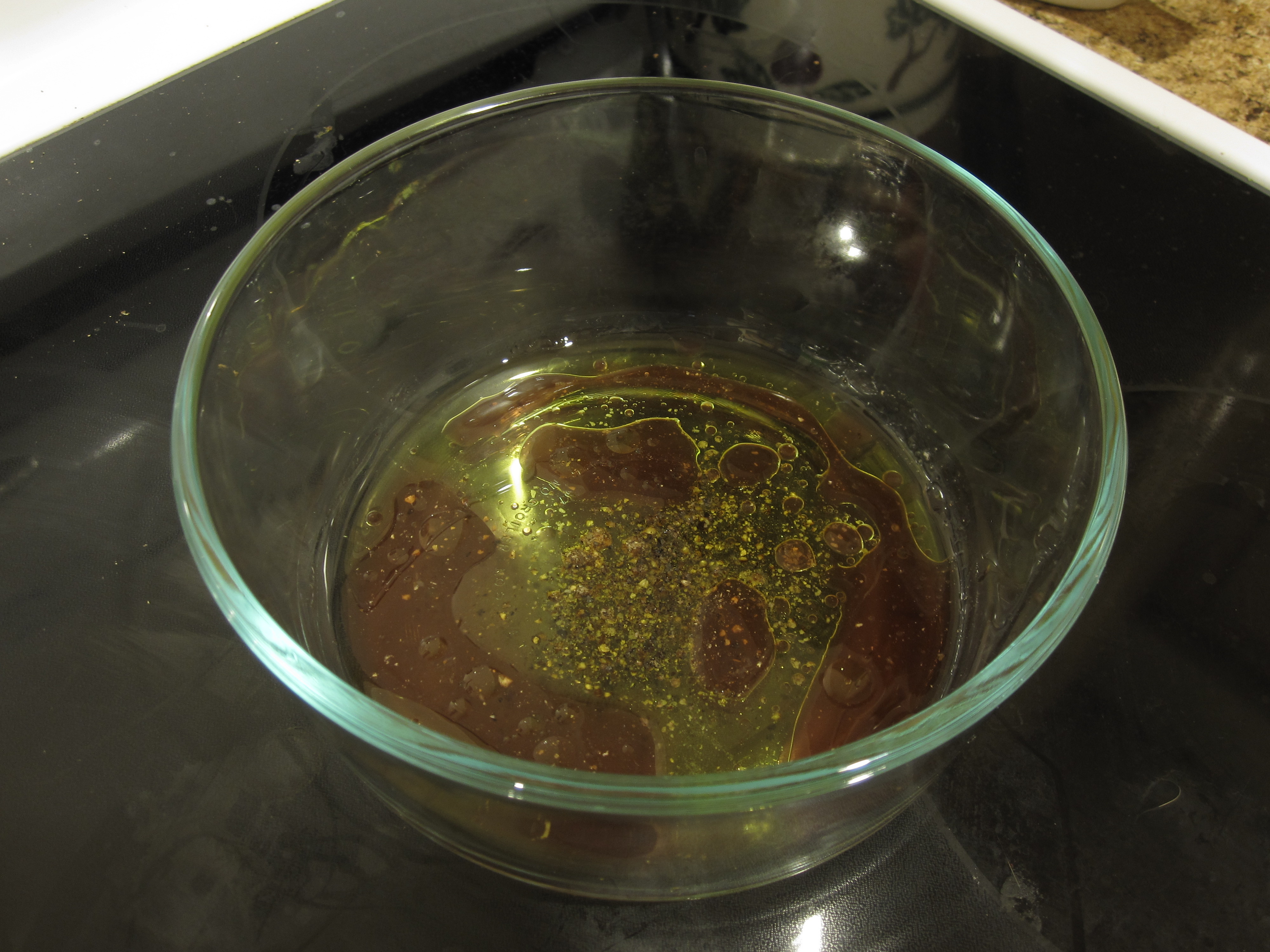
…some vinaigrette…

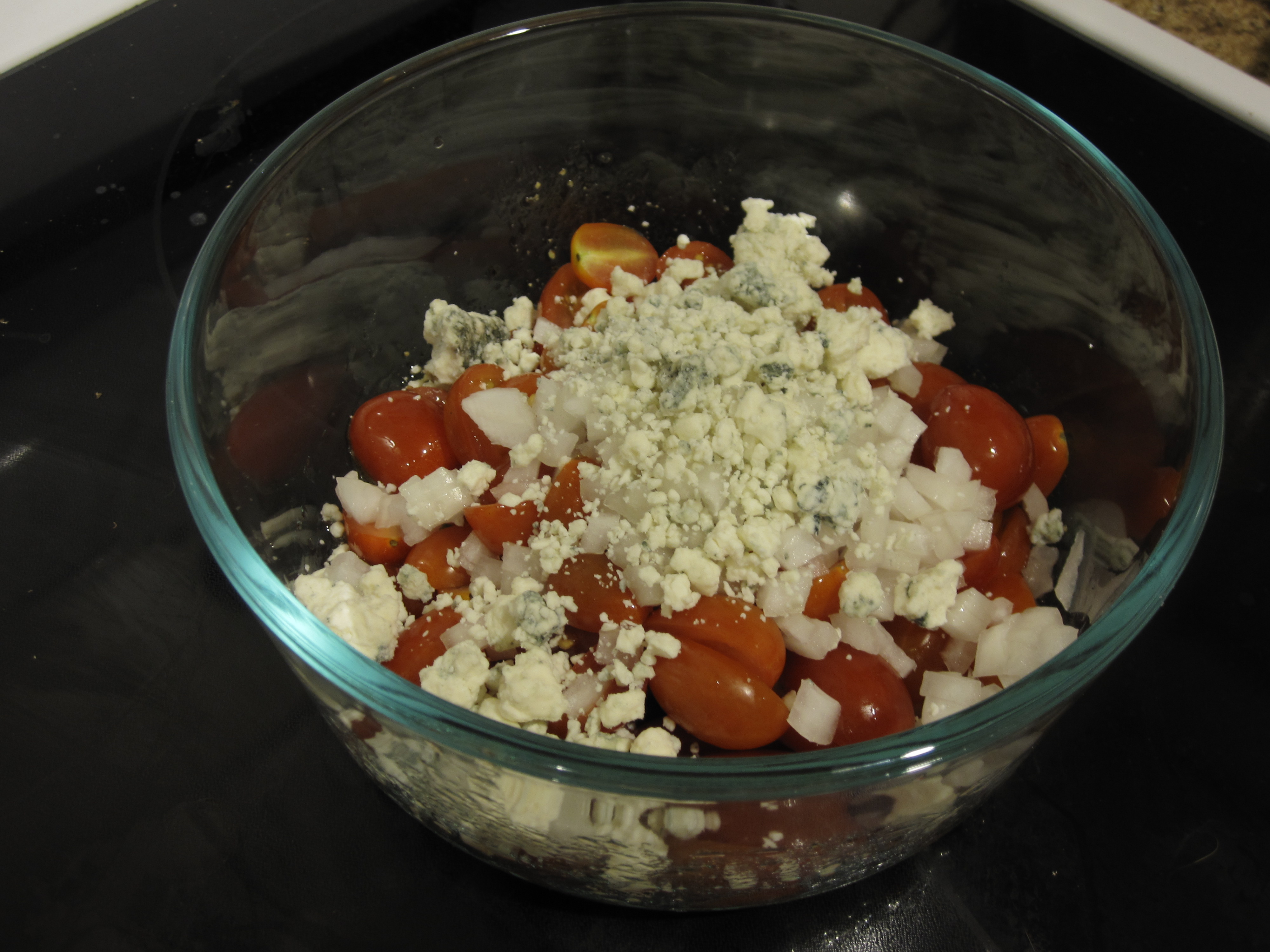
…blue cheese…

…all stirred together. I make similar side with feta but the blue cheese was an ingenious addition. I really loved this! Next time I make it, I may add some lemon juice for a little more acidity. I used red wine vinegar, though the recipe called for white wine vinegar, which may be why it was quite as acidic as it should be. The vidalia onion was also a pleasant surprise, as I typically would use red onion in this type of side. It’s a much more mellow onion than the onions I typically use and worked nicely not to overpower the tomato and blue cheese.

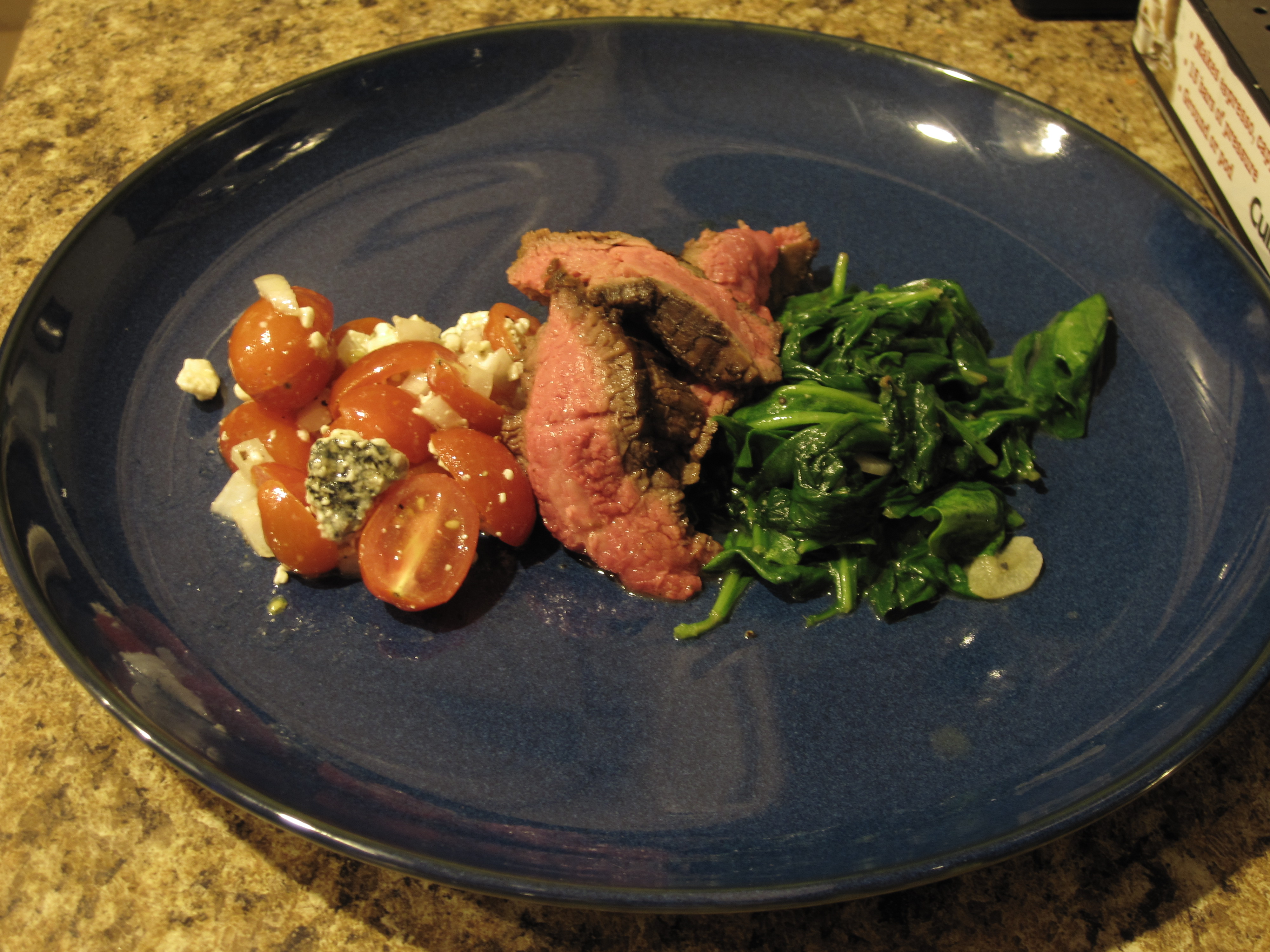
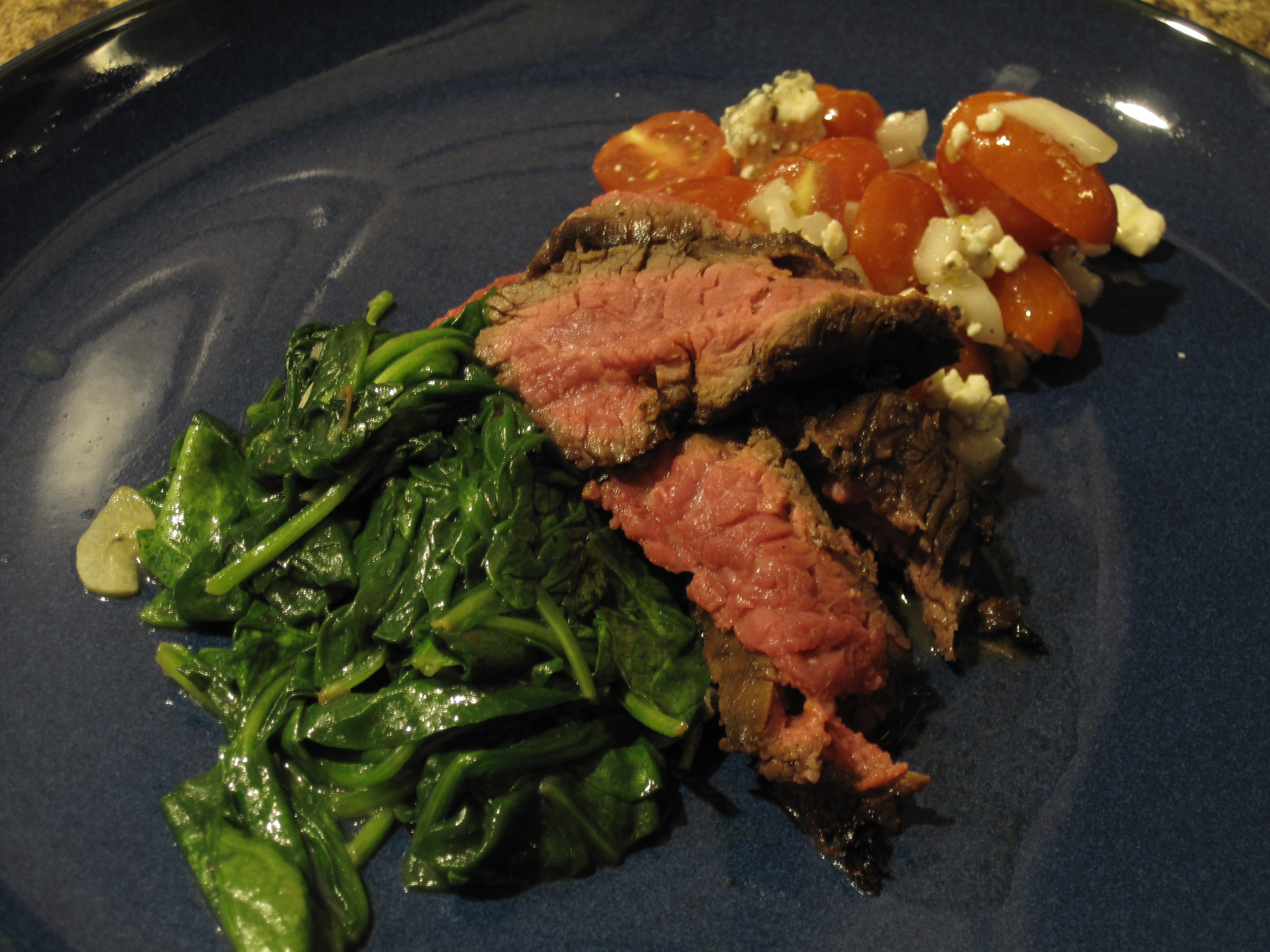
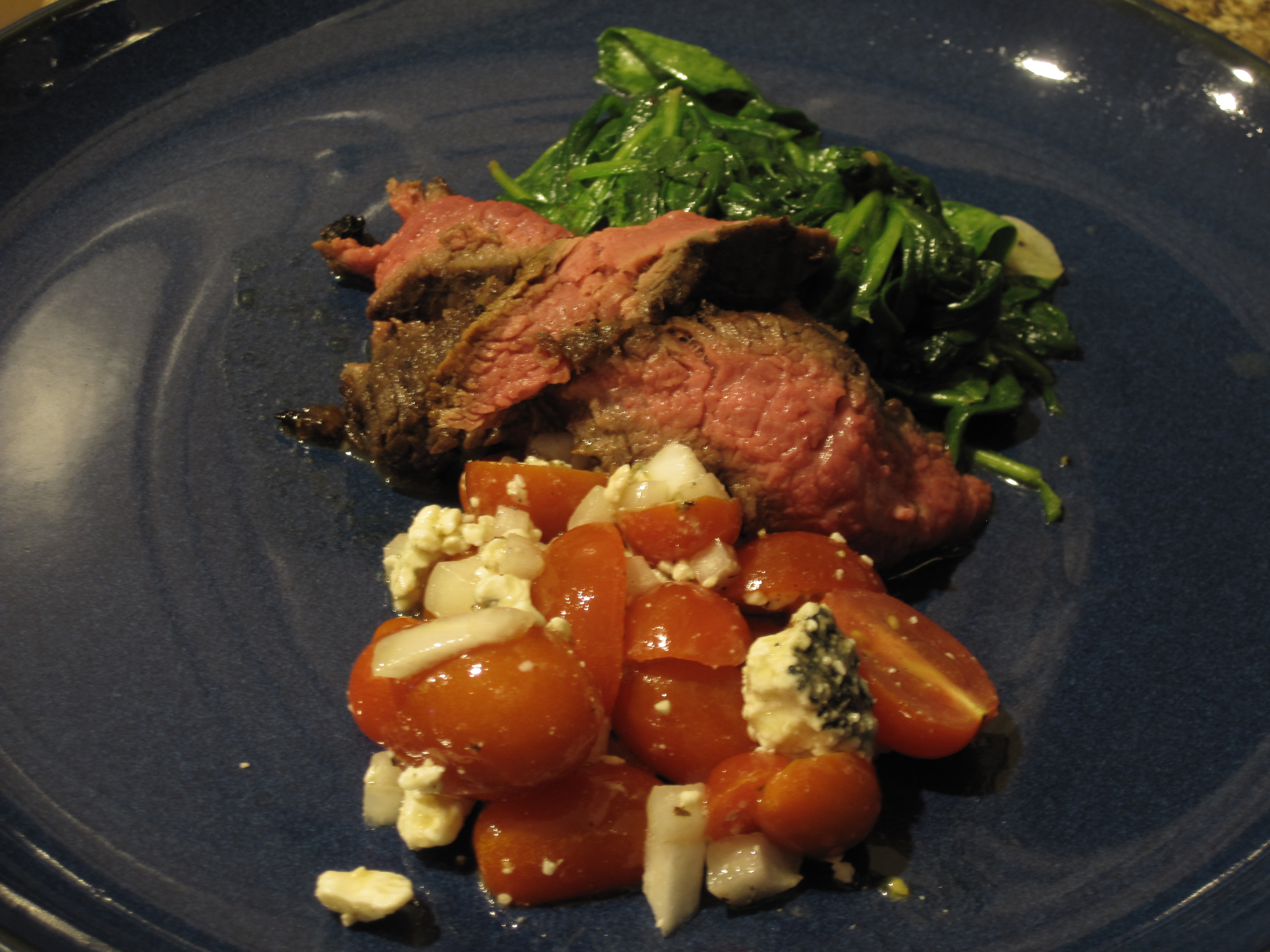
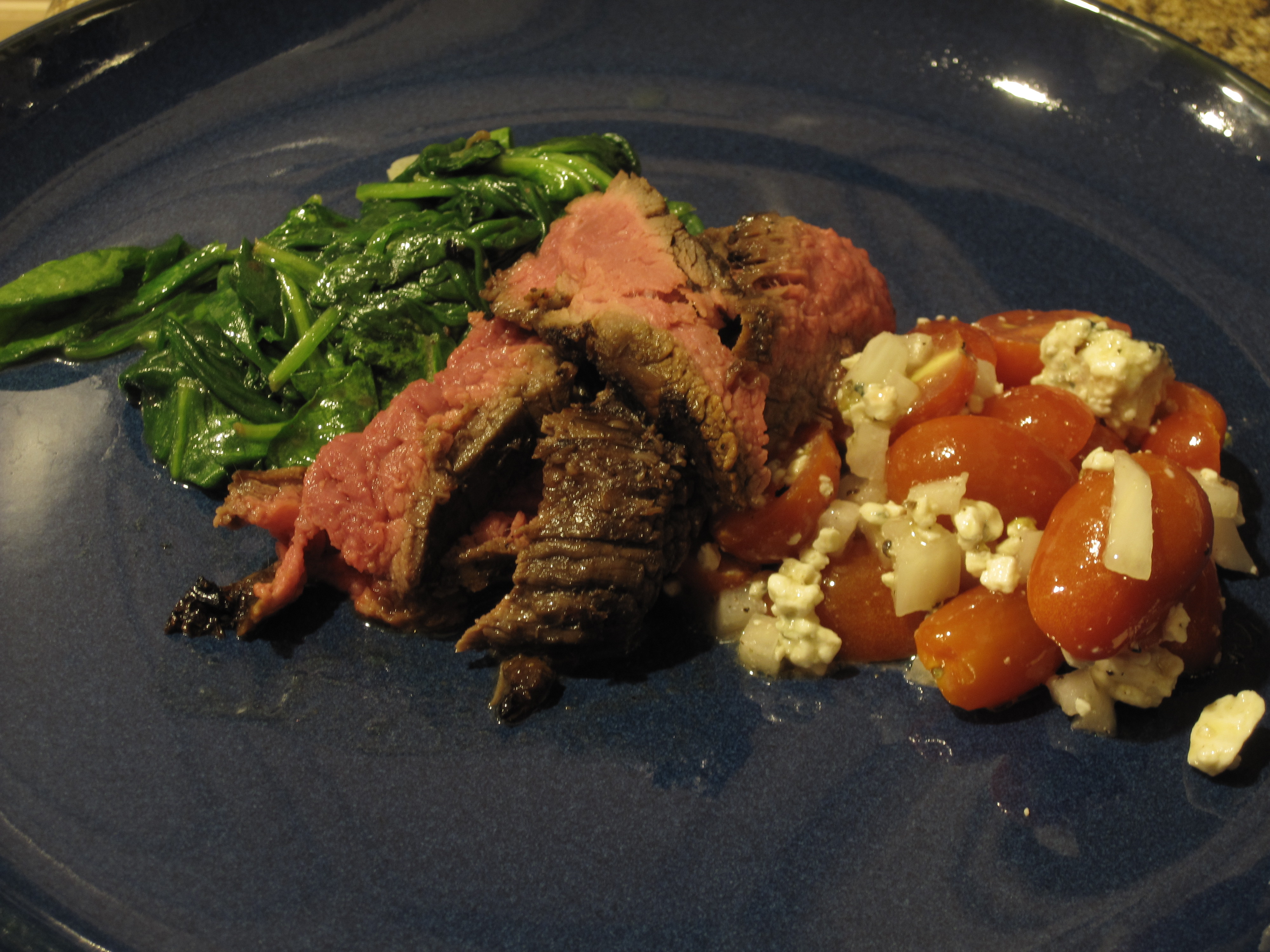
Here are some more glamor shots of the meal 🙂

Needless to say I really liked this dinner. All the flavors, textures and temperatures of everything worked so well together. The sweetness of the steak was countered nicely by the sharpness of the blue cheese, the flavorful onions, and garlicky spinach. The soft texture of the steak balanced by the crunch of the salad and warmth of the spinach. I could really go on and on… try it and you’ll see!

Recipe for Grilled Balsamic Flank Steak

Recipe for Garlicky Spinach

Recipe for Tomato, Onion, and Blue Cheese Salad

Edamame Hummus

I first ran into edamame hummus at Trader Joes, but I did not buy it. I left intrigued though and wondered if it was any good. A week or two later while I dined at Scion in DC I was able to try their version of edamame hummus. I was hooked. It was delicious and familiar enough (not a huge departure from the traditional chickpea version) and I wanted to take a stab at making it. I decided it would make good tailgating food with some cut up veggies and homemade pita chips and so I decided to go for it. I set forth in my research through various blogs and websites and it seemed there were two paths to go on: one oft-made version involving silken tofu and then countless other versions that essentially swapped edamame for chickpeas. Being that I don’t typically eat silken tofu and that I have a strong affinity for and familiarity with the traditional hummus flavors, I finally settled on the latter version from foodnetwork.com, which I changed slightly and doubled.

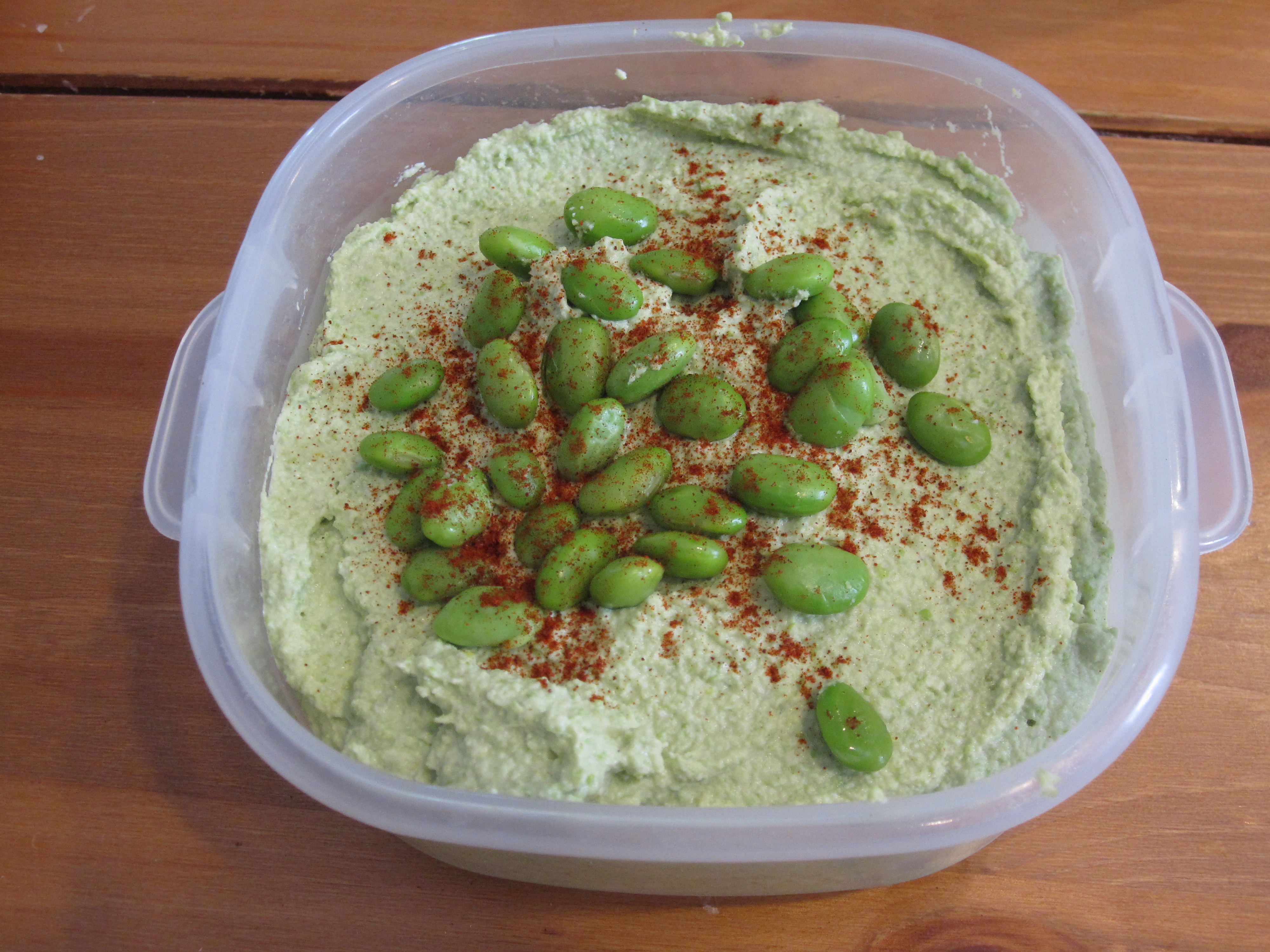
The recipe is relatively simple and a food processor or blender is a must. Essentially, all it takes are shelled edamame, tahini, lemon juice and zest, garlic, salt, cumin, coriander, and water. Throw all of those ingredients in the food processor and slowly drizzle in some olive oil and voila! It comes out a beautiful light green color and I dressed mine with a  few extra beans and some paprika.

I also made homemade pita chips- which are super easy to make and a true crowd pleaser. To make these, just cut up the pitas into chip size and place them on a baking sheet. I spray mine with extra virgin olive oil and sprinkle with salt and pepper (but you can add as many different spices as you like) and bake them for about 10 minutes at 350 degrees. I also served the hummus with cut up veggies, including broccoli, peppers, cucumbers, celery, and carrots, which were all great with the hummus.

This dish was fun and unique enough were people seemed excited to try it. I hope you like it!

Recipe for Edamame Hummus

Lamb Shanks Braised in Wine Sauce

You know how when you cook something all day and then when it’s finally ready you don’t take the time to get a good picture? Yeah. That’s what happened here. This also happens to be the smallest of the four lamb shanks we had. Bad picture taking, bad.

In any event, I still wanted to share the recipe, despite the less than desirable way that this photo depicts this meal, because the taste was great and that’s what really counts.

I bought the lamb shanks from the farmer’s market and promptly contacted my dad for a proper recipe. He sent me one from Emeril and it did not disappoint. Greg also made carrots braised in beer and carrot juice, a recipe he tweaked from this one. He added some of his own touches and threw in some broccoli at the end for added veggie power.

To the shanks!

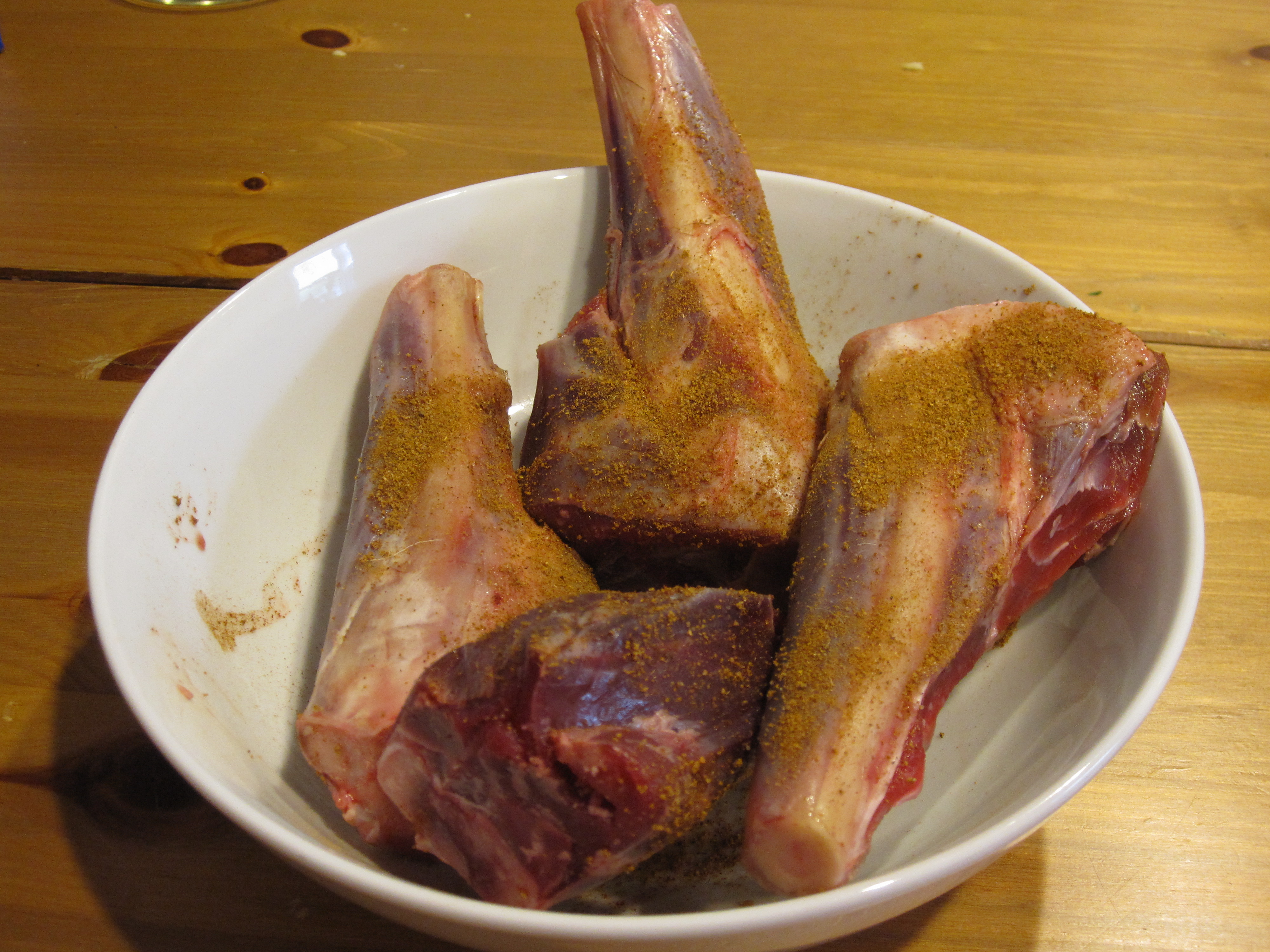
Here they are. There are actually four of them pictured here and they have been sprinkled with cajun seasoning. Emeril calls for “creole seasoning” but I don’t have that in my spice drawer. What I did have though was “cajun” and so we went with that.

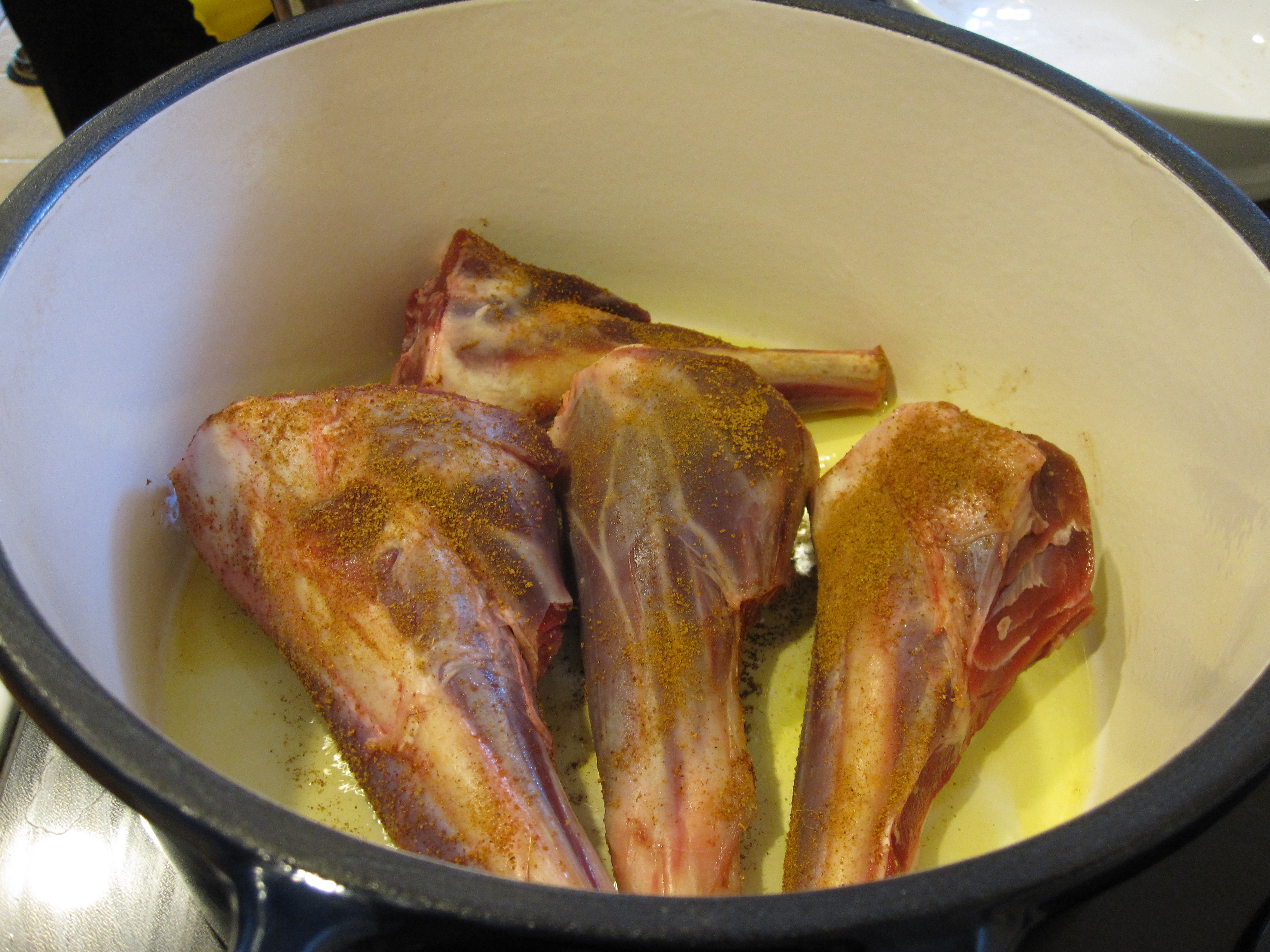
I got the dutch oven nice and hot and added some olive oil. When the olive oil was sufficiently hot, I added the shanks to get a nice brown sear on all sides.

Next, I added chopped carrots, onions, and celery to the mix.

Hmmm… what’s missing from this picture? Yeah, the shanks! Guess I didn’t read the recipe well (I looked at a few recipes that day and must have gotten them mixed up) as it says to leave the shanks in when you add the carrots, onions, and celery. Woops.

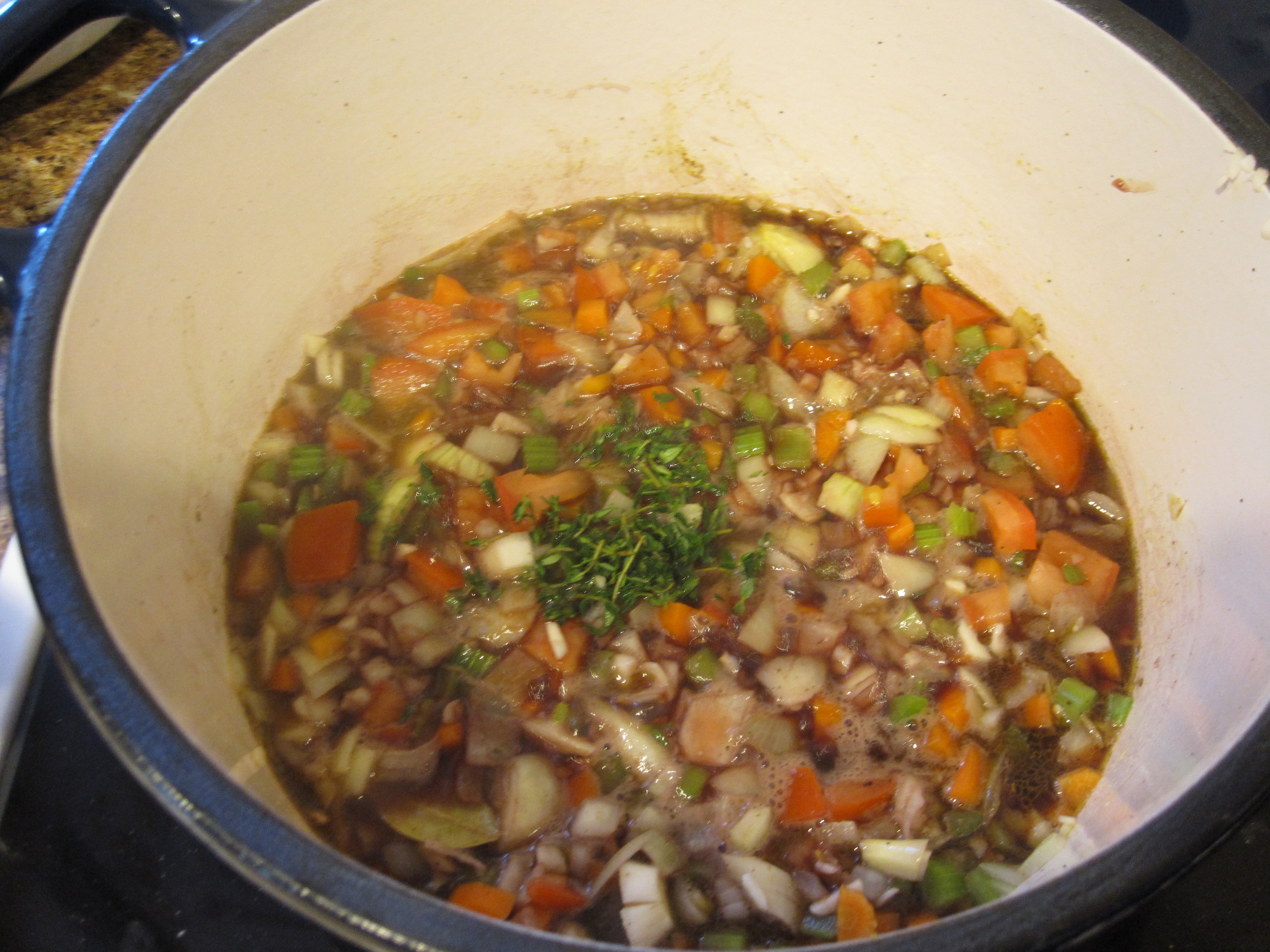
Next, I added a diced tomato, garlic, wine, stock, thyme and some bay leaves.

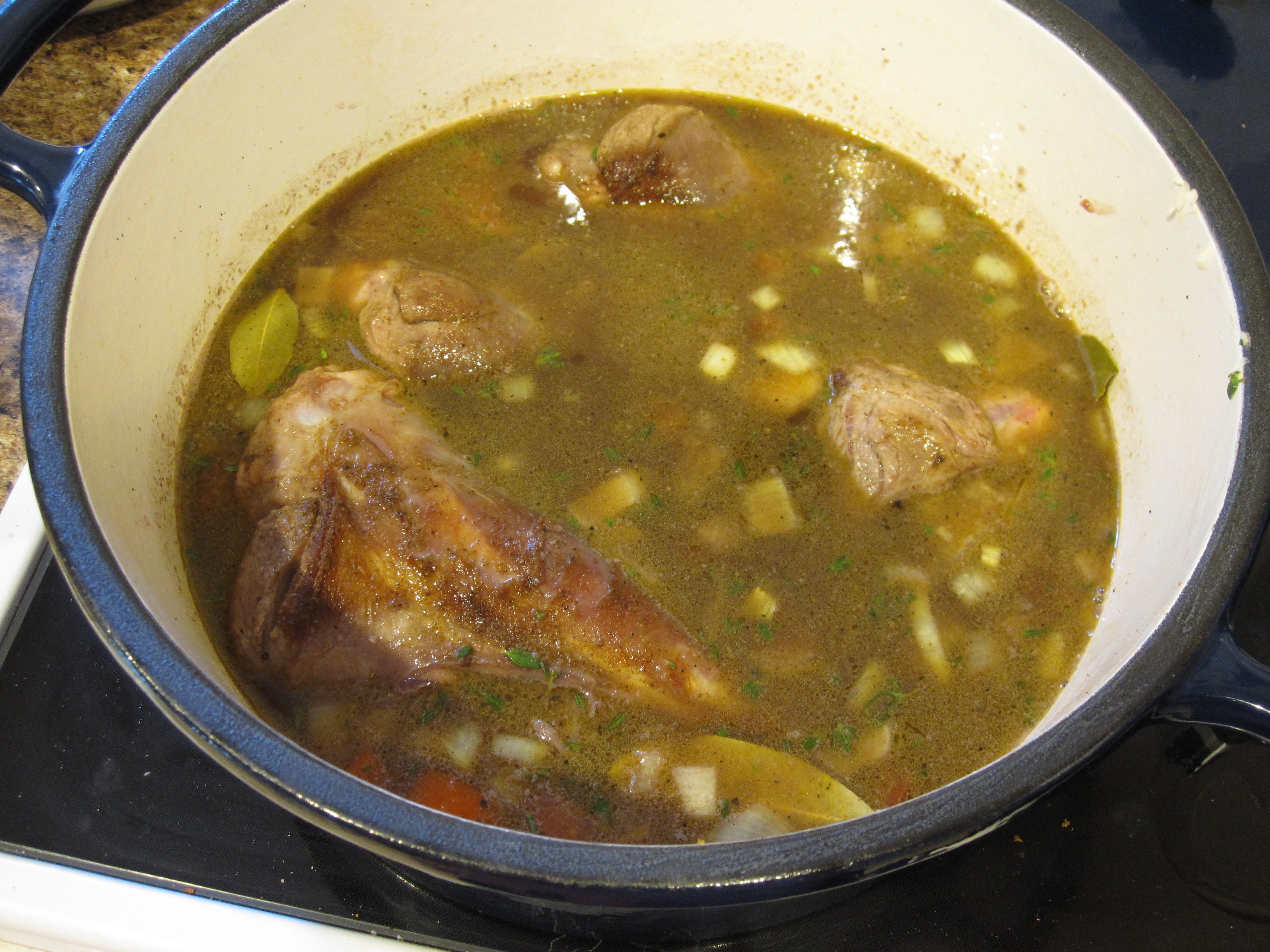
Gave it a good stir and look who’s back…. the shanks!

After a frenzied few minutes, it was then time to put the lid on and turn the burner down to low for a long slow simmer.

The shanks braised for nearly two hours.

This is pretty much what they looked like after that time.

The broth or braising liquid was so flavorful. it never did reach a “syrup” like consistency, but it was so good that I considered saving it for something, though I don’t know what. It was amazing though….

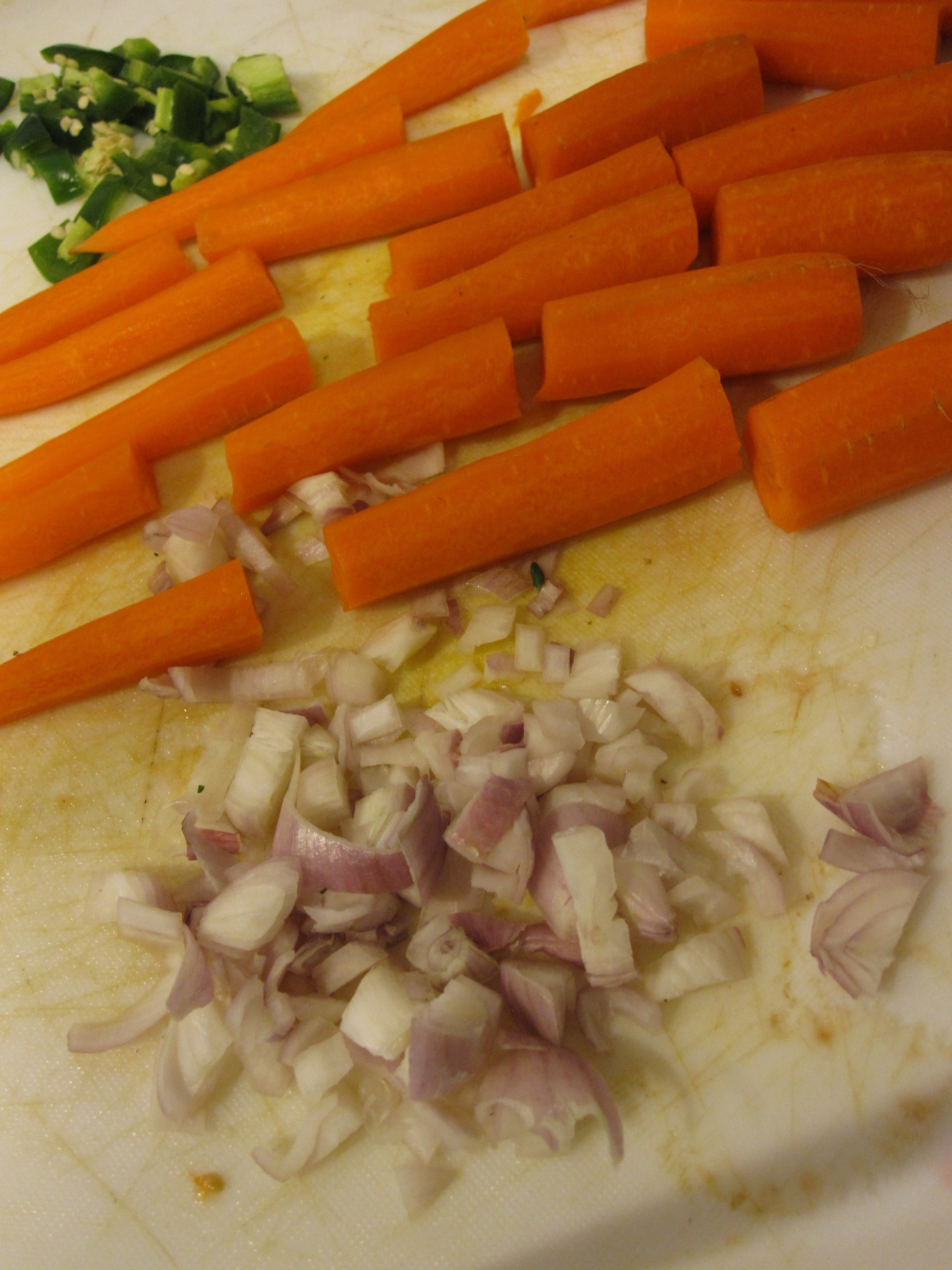
To continue with the braising theme, Greg prepped the veggies.

It just would not be a Greg-made dish if onions, garlic and jalapenos were not part of the mix!

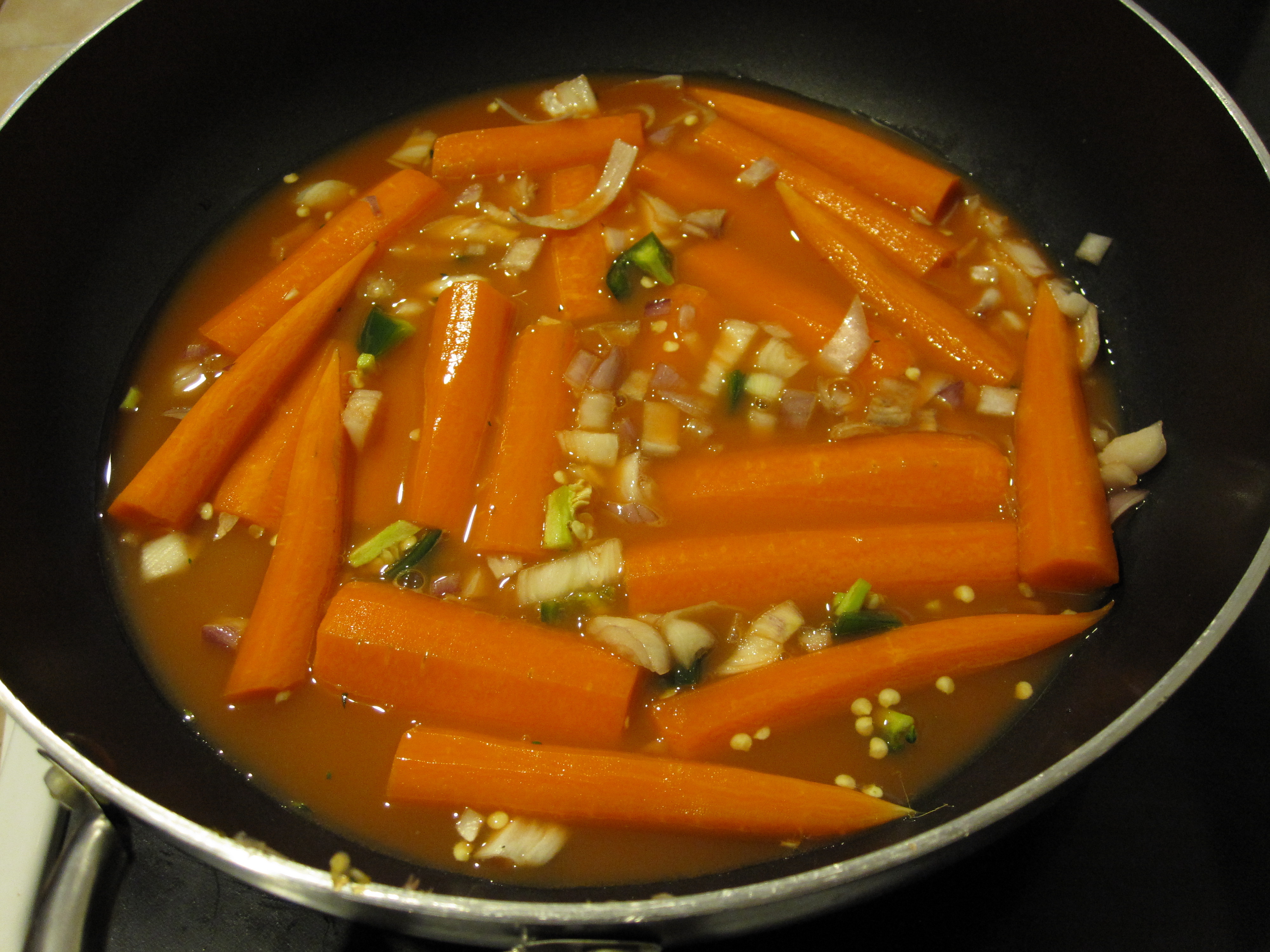
The carrots braised in beer and carrot juice and he added a little butter near the end of cooking to make the sauce thicker. The broccoli was a last minute addition.

Despite the fact that the shank looks like a lamb lollipop it was super good! I served it with a small side cup of the braising liquid to dip so each bite had the full effect. The meat was fall off the bone tender and it tasted so fresh and not gamey at all. I am dying to make that mint orzo that Emeril suggests to accompany this with one day. Not only would the flavor and texture be a great match, but it could soak up some of that broth, mmm.

Overall, this recipe was pretty easy to make and once you get it going you can walk away and do other things… so not too labor intensive.

How to make the perfect omelet

(I’d like to point out that omelet can be spelled two ways- omelet or omelette. WordPress does not like omelette so I am going with the former)

I rarely consider myself to be an expert on any thing culinary, but I am proud to say that I have learned how to make a great omelet! I don’t know if it warrants a “how to” post per se, but why not? So, here goes…

For years and years we have eaten egg dishes on the weekends. Scrambled, over easy, “dippy”, poached, the list goes on and on. Sometimes, we added other ingredients to our eggs, but they just got scrambled along with the eggs. This was good and all, but it never came out looking very pretty and each bite was drastically different from the next, which is not necessarily a bad thing, but ya know.

When we were in Jamaica we went to the breakfast buffet every morning (yeah, I think I mentioned how indulgent the trip was!). At the buffet I visited the omelet making station a few times and studied the omelet maker very closely. I was very eager to learn what the secret was and I was able to pick up a few ideas to utilize at home from her.

1. She used a nice, rather large, flat top grill (not something I have access to, unfortunately) with a large metal spatula.

2. She used the spatula to grease up the grill before every omelet (oh yeah).

3. She mixed the eggs with the filler ingredients in a small bowl and then poured the mixture onto the grill.

4. She let the egg mixture cook for about 2-3 minutes or so and then added the cheese.

5. After adding the cheese, she closed up each side of the omelette and served it almost immediately.

Like I mentioned, I do not have a flat top grill so I use a frying pan. This works fine, as long as it is greased well with butter (hence that nice brown crust on the omelet above), but can present some challenges when it comes to maneuvering the spatula under the sides of the omelet to close it up.  Overall though, it works well. I use a plastic spatula since the pans are (or were at one point) non-stick and I make sure to use the largest one we have and sometimes even use two spatulas to carefully maneuver it to the plate.

First, I like to prepare all of my omelet ingredients. For this particular omelet I am showcasing here I used some ingredients that I purchased at the local farmer’s market.

I cooked some local, farm-fresh chorizo, made from naturally raised (and fed) pigs. YUM! This chorizo rocked!

I also added some local ramps. Ramps are a big deal in the foodie world and I was lucky enough to find them at the farmer’s market as well. They have an oniony-gralicky flavor and I couldn’t resist them, even if they were overpriced.

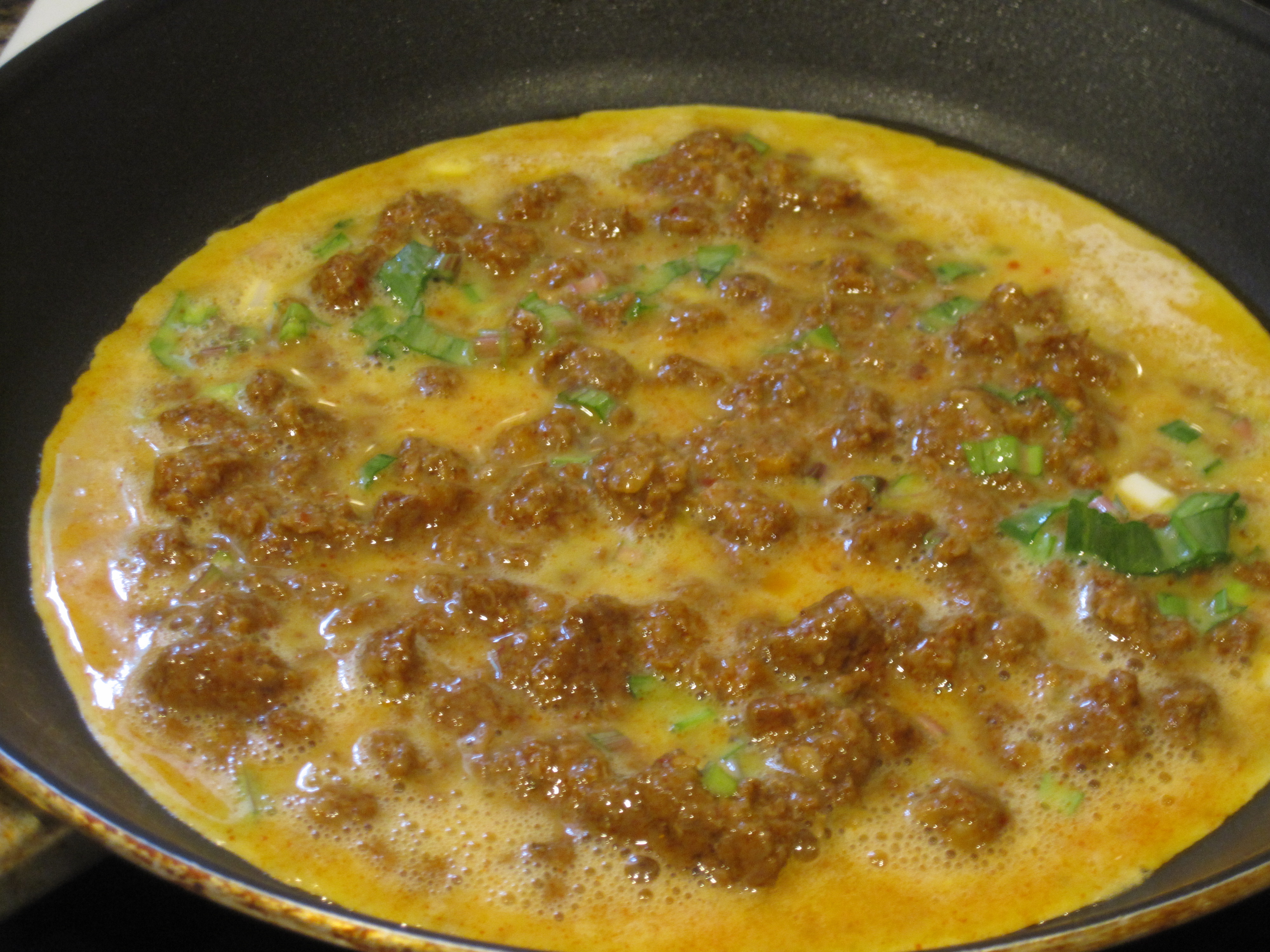
Once the chorizo was cooked and the ramps chopped up, I added a serving of each to 3 beaten eggs (I also added some previously cooked spinach to my omelet) and prepared my cheese for when the time would be right to add it (I used goat cheese for mine, shredded cheddar for Greg’s). Preparation is essential because once the omelet goes into the pan, everything happens really quick!  OK, time to cook!

Butter is really the key here. If the omelet sticks to the pan at all, it’s ruined! OK, that’s a bit drastic it won’t be ruined but it won’t look pretty or cook the way you want it to. So butter people, don’t be afraid! Use just enough to coat the pan well and make sure it spreads ALL over the pan. Also, make sure the butter is bubbling slightly (you probably want to set your burner to medium heat) so it’s hot enough to cook the eggs but not too hot where the bottom will burn.

Add your egg mixture.

(I think this one is Greg’s omelet: tons of chorizo, some ramps, no spinach)

Like I mentioned, moving quickly is essential and I was not able to snap a picture of when I put the cheese in (sorry!). I know to put the cheese in when the edges turn white (about 2-3 minutes in) and the top is considerably less runny. There will still be some runniness to it when you add the cheese, but considerably less and the bottom will have started to firm up. If you are unsure you can take a peek by using the spatula to pick up one of the edges. If the bottom has started to brown you are good to go.

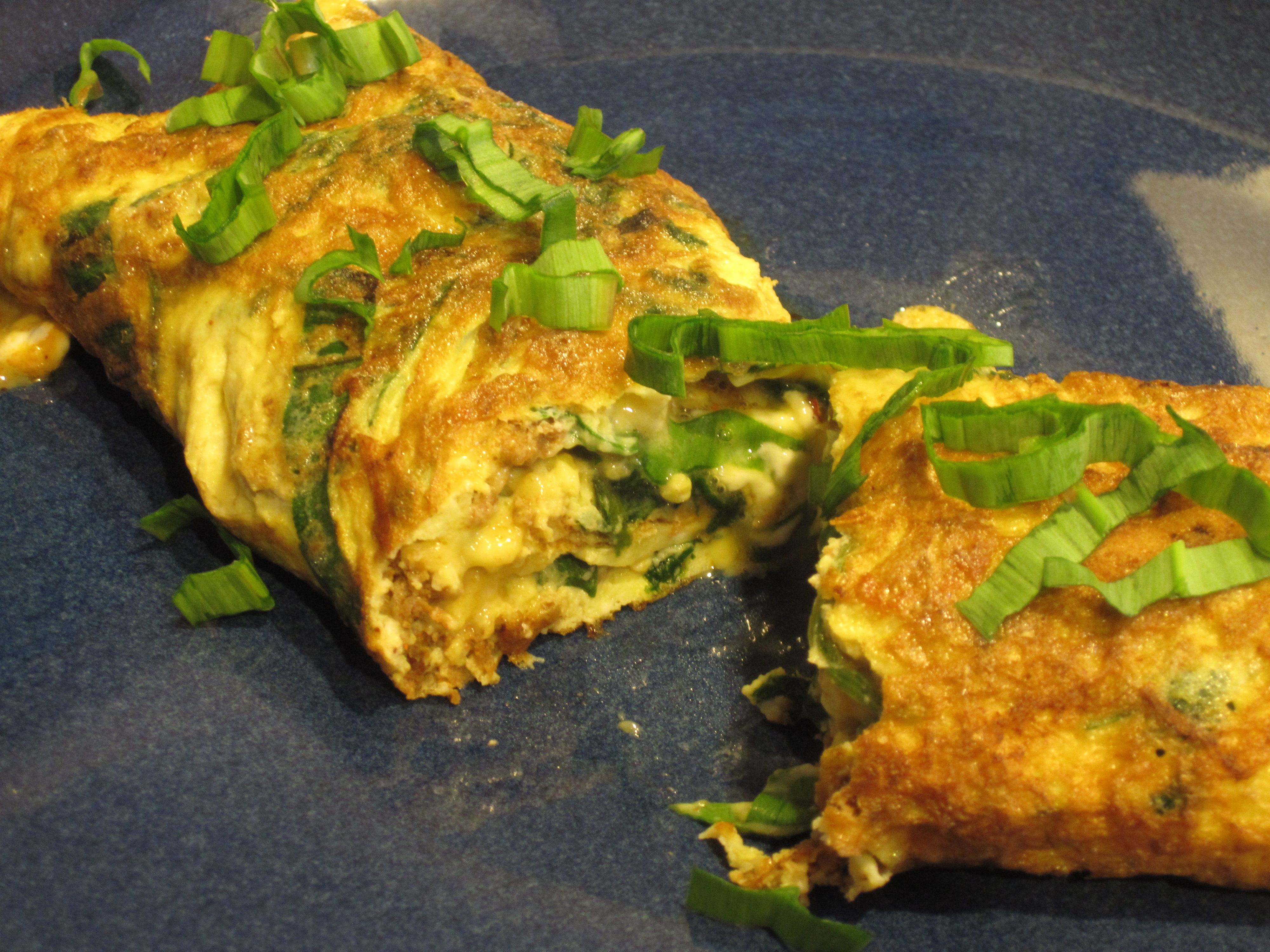
After adding the cheese, just flip each side’s edge in towards the center. Or, flip one edge into the center and the flip the entire half-moon over onto itself.

Remove from the pan and put on a plate. It will finish cooking on the plate and the cheese will melt within seconds.

Check out the “layered” center.

This one below is the chorizo, spinach, and goat cheese omelet with fresh ramps.

Hopefully, with these basic steps you can make a great omelet too. I think it takes a little practice and patience, especially for the folding over part, but it’s worth it!

Good luck!